


4 Switches 1 Light Control
Learn how to wire 4 switches to control 1 light from multiple locations using intermediate and two-way switches for staircases, hallways, or large rooms.
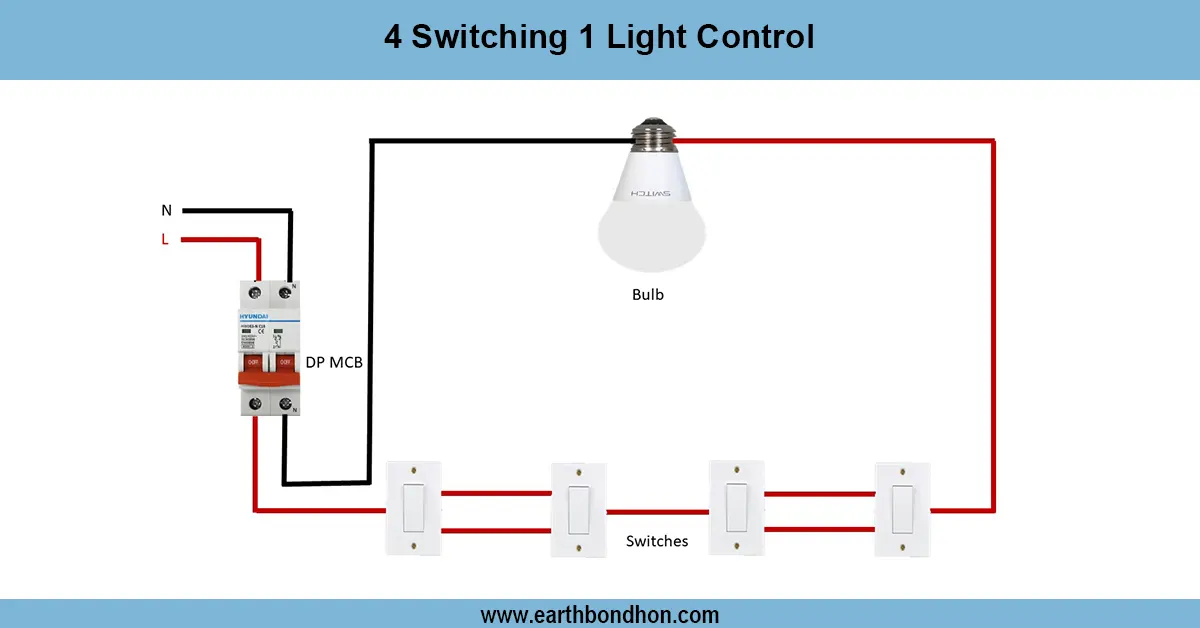
4 switch 1 light connection
The 4 switches A 1-light control wiring system is a multi-way switching system that permits one light to be turned on and off at four points. It is done with 2 three-way switches at both end points, and on the middle side it has 2 intermediate (4-way) switches. It actually finds usage in stairways, long corridors, and large rooms where it is crucial that lighting can be controlled at various points. The rationale of this circuit is that electricity flowing through the circuit can be flipped on or off by use of different arrangements of switch positions. When properly wired, one or some of the four switches may be used to turn the light ON or OFF; this feature makes this circuit very flexible and user-friendly.
Wiring Formula Summary:
- 2-Way Switch → Intermediate Switch → Intermediate Switch → 2-Way Switch
The traveler terminals of each switch are connected accordingly, and the phase and load wire are connected at the ends.
four-way light switch diagram
It is a typical way to require control of only one light that can be accessed in four locations, like in staircases, corridors, or giant halls. The configuration consists of two 2-way switches at each end and two middle (4-way) switches in the middle of them. Any switch, when correctly wired, can switch off the light (turn it ON) or switch on the light (turn it OFF) independent of the position of any other. This will be a convenience in controlling the lighting at various entry points. The wiring means the connection of the common and traveler terminals of the switches and the insertion of the power in the chain. It works in a braver way than the common 2-way switch system but is far better during work.
light control from multiple points
| Switch Position | Intermediate A | Intermediate B | Light State |
|---|---|---|---|
| Down | Cross | Straight | OFF |
| Up | Cross | Cross | ON |
| Down | Straight | Cross | ON |
Frequently Asked Questions - 4 Switches 1 Light Control:
What is 4 switch 1 light wiring?
It allows controlling a single light from four different locations using 2-way and intermediate switches.
Which switches are needed?
2 two-way switches and 2 intermediate switches.
Where is this setup used?
In hallways, staircases, large rooms, and warehouses.
Can I use normal switches for this?
No, intermediate (4-way) switches are required for the middle points.
Is it a series or parallel connection?
It's a multi-way parallel switching circuit.
What cable is used for connection?
Use 3-core or 4-core wire depending on switch layout.
Does this affect power consumption?
No, only switching control is affected.
Is neutral required at each switch?
No, only at the light point; switches control phase.
Is this safe for home use?
Yes, if wired properly and breakers are used.
Can I automate this setup?
Yes, smart switches can replace manual ones for automation.
Related Posts
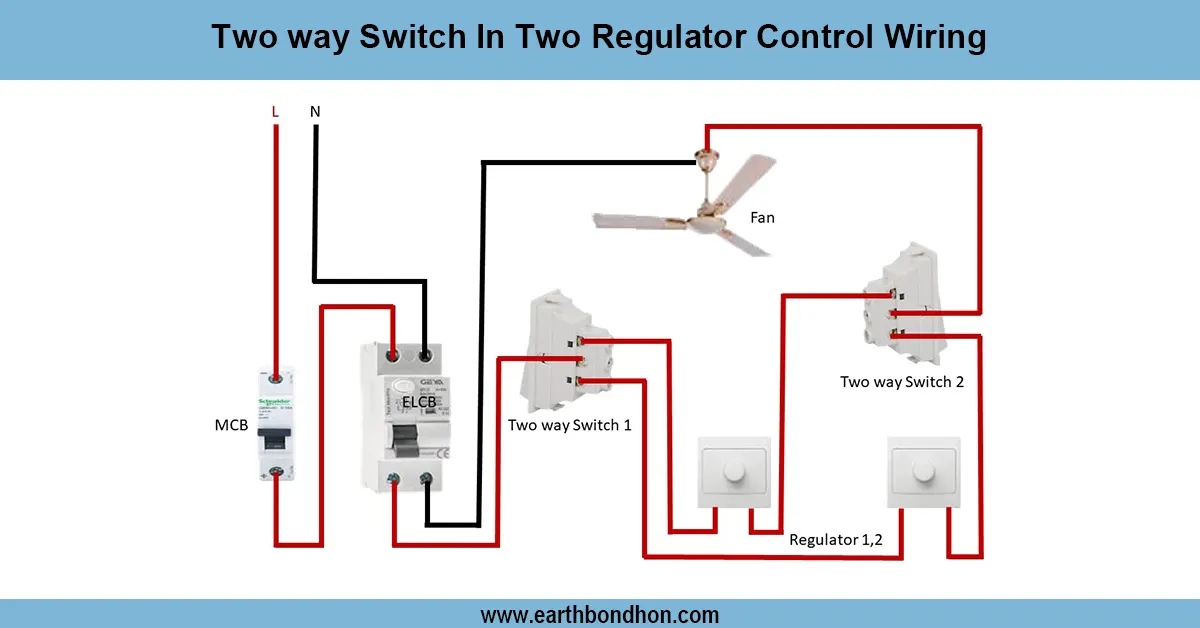
Two way switch fan regulator connection
Wiring diagram for controlling two separate light regulators from two locations using two-way switches for flexible ON/OFF control.
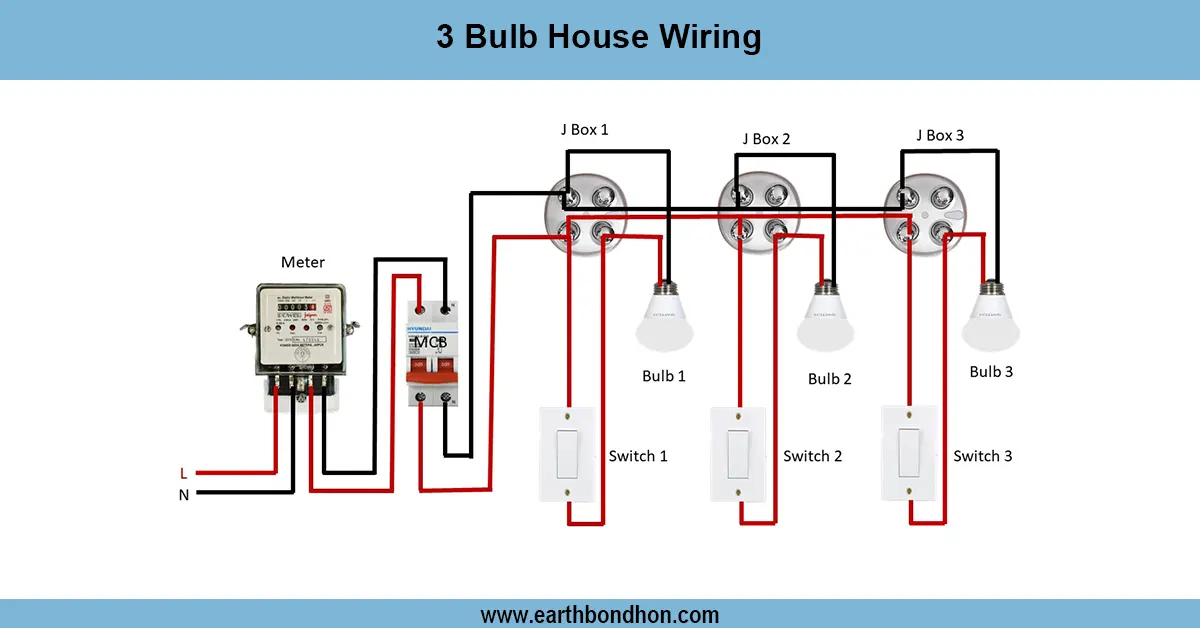
Single Phase House wiring circuit diagram
Simple 3-bulb house wiring diagram showing connections of bulbs with switches and power supply for safe and efficient home lighting control.
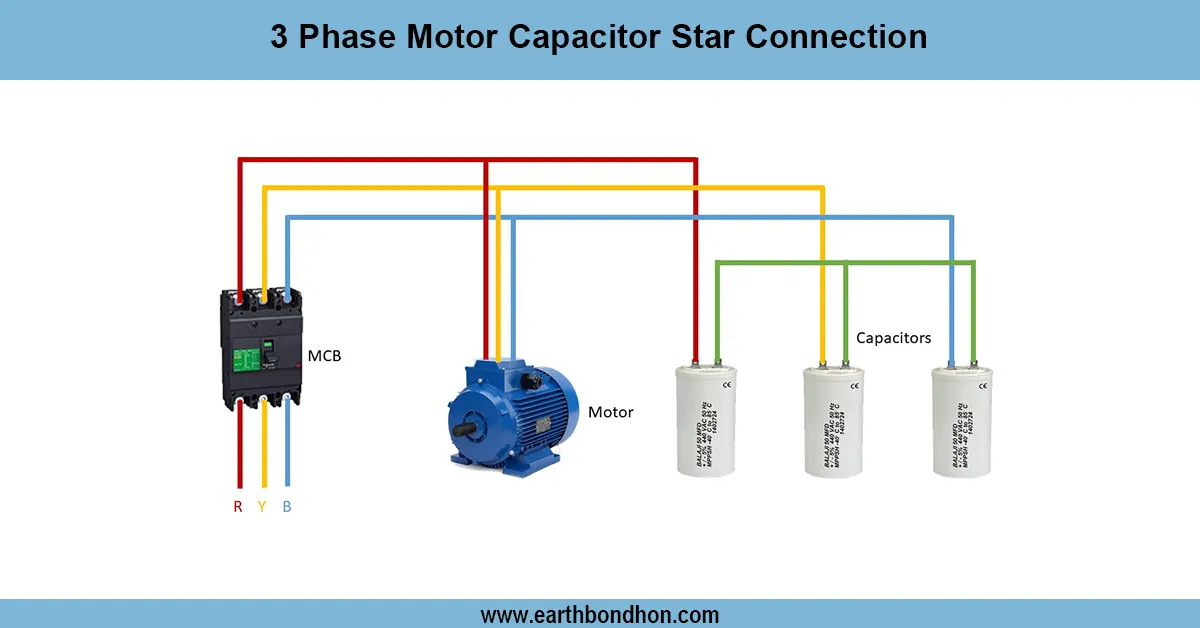
3 Phase Motor Star Connection Diagram
Learn 3-phase motor capacitor star connection wiring for starting and running capacitors, ensuring efficient motor operation with clear wiring steps.
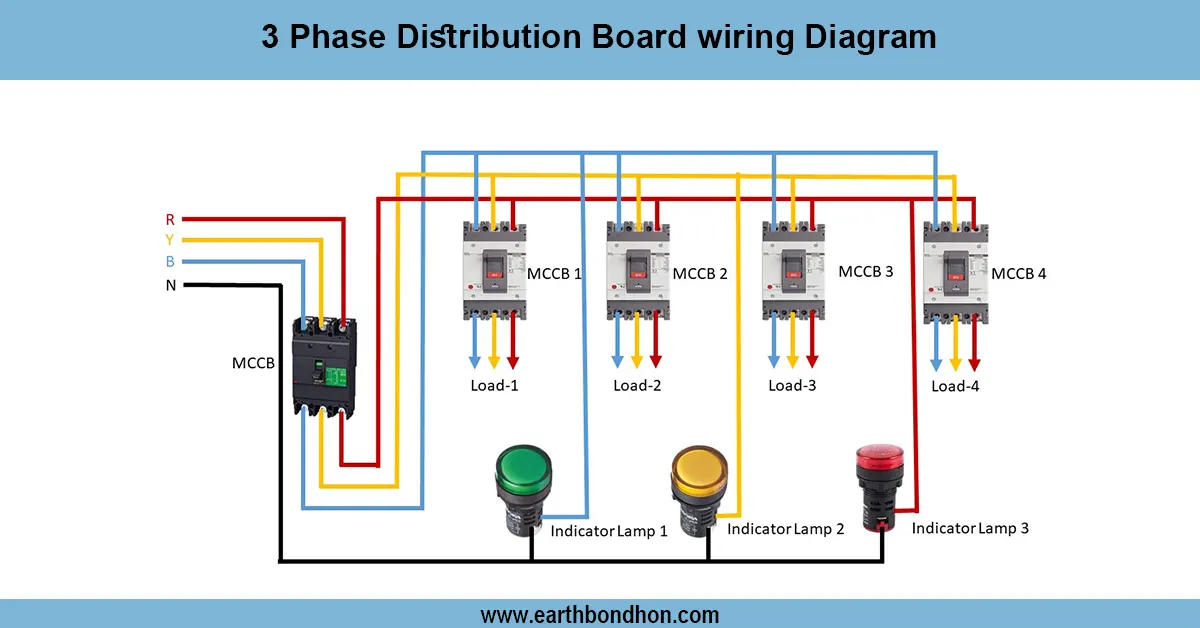
3 Phase Distribution Board wiring
Comprehensive 3-phase distribution board wiring guide for safe and efficient power distribution with MCCB, breakers, neutral, and earth connections.
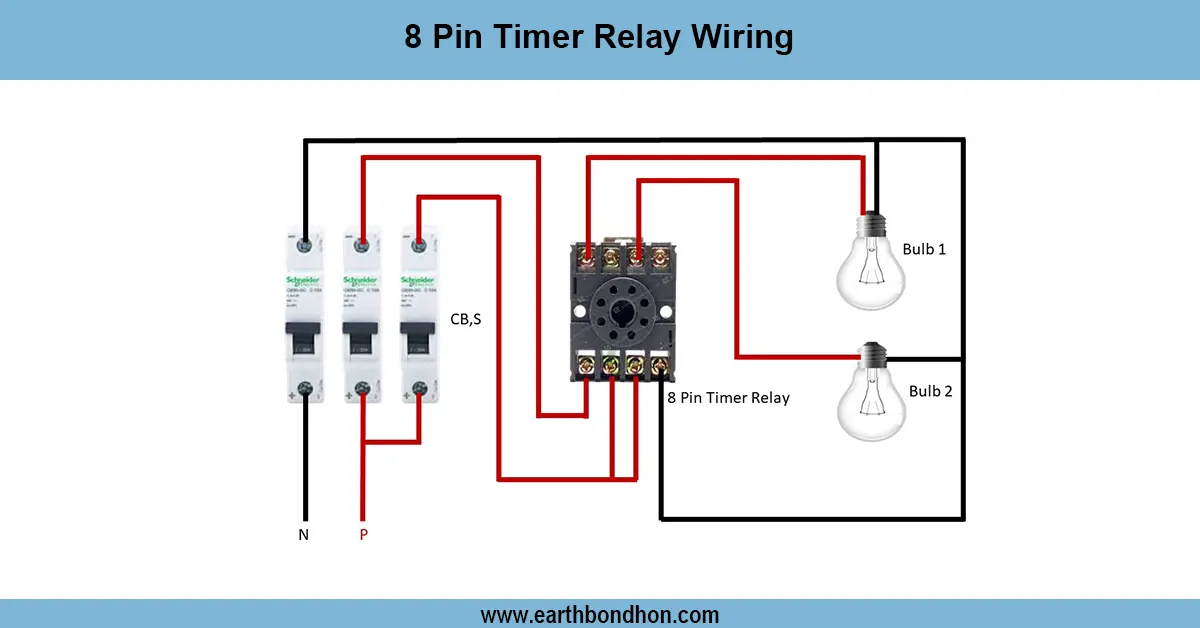
8 Pin Timer Relay Wiring Diagram
Understand 8-pin timer relay wiring with easy diagrams. Learn pinout, connection steps, and functions. Perfect for electricians and electronics hobbyists.
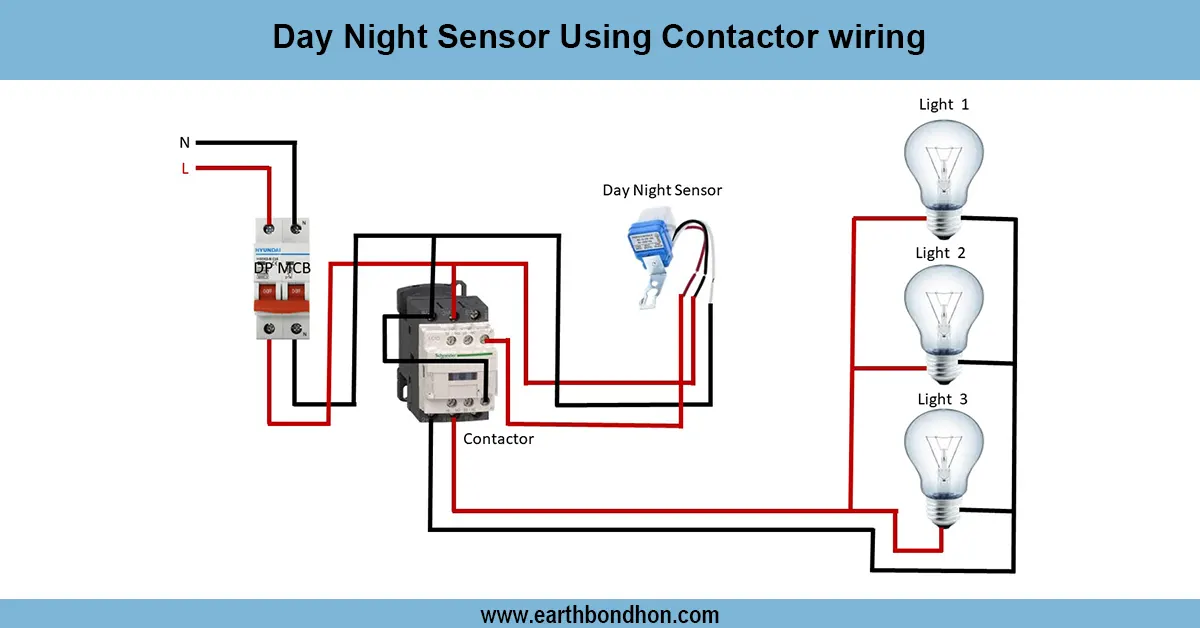
Day Night Sensor Using Contactor wiring
Automatic lighting control using a day-night sensor with a contactor for high-load circuits, ensuring safe, efficient, and hands-free operation.