



Day Night Sensor Using Contactor wiring
Automatic lighting control using a day-night sensor with a contactor for high-load circuits, ensuring safe, efficient, and hands-free operation.
electrical wiring single phase
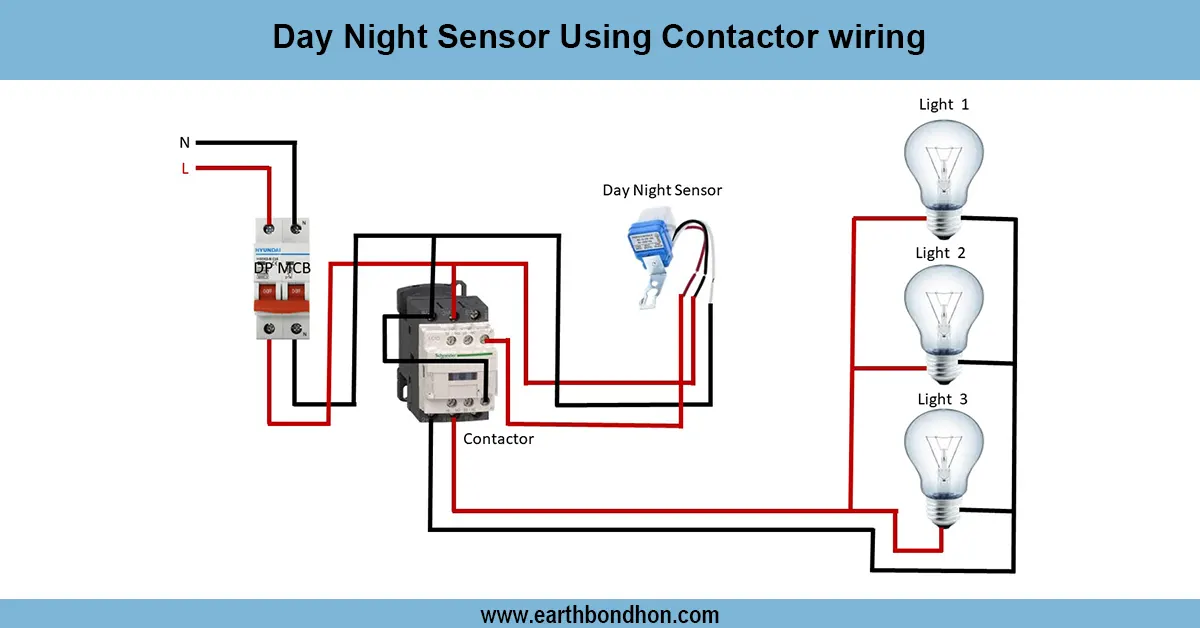
Day/night sensor, contactor, is the solution to controlling a large lighting load on an automatic basis. The contactor carrying the heavy load is switched by the low-current control output of the sensor and leading to safe and efficient operation. The system is very common in commercial and industrial lighting applications where it is necessary to achieve energy savings and architectural automation.
Formula & Table Summary:
Lighting Load Control = (Sensor Output× Contactor Coil) → Load Terminals
day night sensor wiring diagram
As the connected load is more than the direct switching capacity of the sensor, a day night sensor is used with the wiring of a contactor. The sensor judges on the amount of ambient lights and when the darkness sets in, it energizes the contactor coil. This switches the main contacts of the contactor to apply power to the lighting system. The sensor, when the light goes on the sensor turns off the light. In the morning the sensor shuts off the coil, opening the contacts and shutting off the lights. The approach is suitable when used with street lighting, car parks, yards and expansive outdoor lighting installations. A contactor operating the sensor remains reliable, prolongs the operating life of the sensor, and protects it against high levels of current. Proper connection would be that live and neutral supply gets to the sensor, the sensor contact would go to the contactor coil, the lighting circuit would go through the contactor load.
automatic light switch circuit
| Component | Input Voltage | Output Control | Max Load Capacity |
|---|---|---|---|
| Day Night Sensor | 220V AC | Coil Activation | ≤ 5A direct load |
| Contactor | 220V Coil | Load Switching | 20–100A |
| Lighting Circuit | 220V AC | – | Depends on lamps |
Frequently Asked Questions - Day Night Sensor Using Contactor wiring:
What is a day night sensor with contactor?
A system where the sensor triggers a contactor to switch large lighting loads automatically.
Why use a contactor with a day night sensor?
To handle high current loads that the sensor cannot switch directly.
What voltage does the contactor coil use?
Commonly 220V AC or 24V AC/DC depending on design.
Can I connect lights directly to the sensor?
Only if the load is within the sensor’s rated capacity.
Is wiring complicated?
No, but proper safety precautions and wiring sequence must be followed.
Where is this setup used?
Street lighting, parking lots, and industrial outdoor lighting.
Does it save energy?
Yes, lights only operate when needed, reducing energy consumption.
Can I adjust light sensitivity?
Yes, most sensors have adjustable lux settings.
Is maintenance needed?
Occasional cleaning of the sensor lens and checking connections is advised.
What happens if the contactor fails?
Lights may stay on or off until the contactor is replaced.
Related Posts
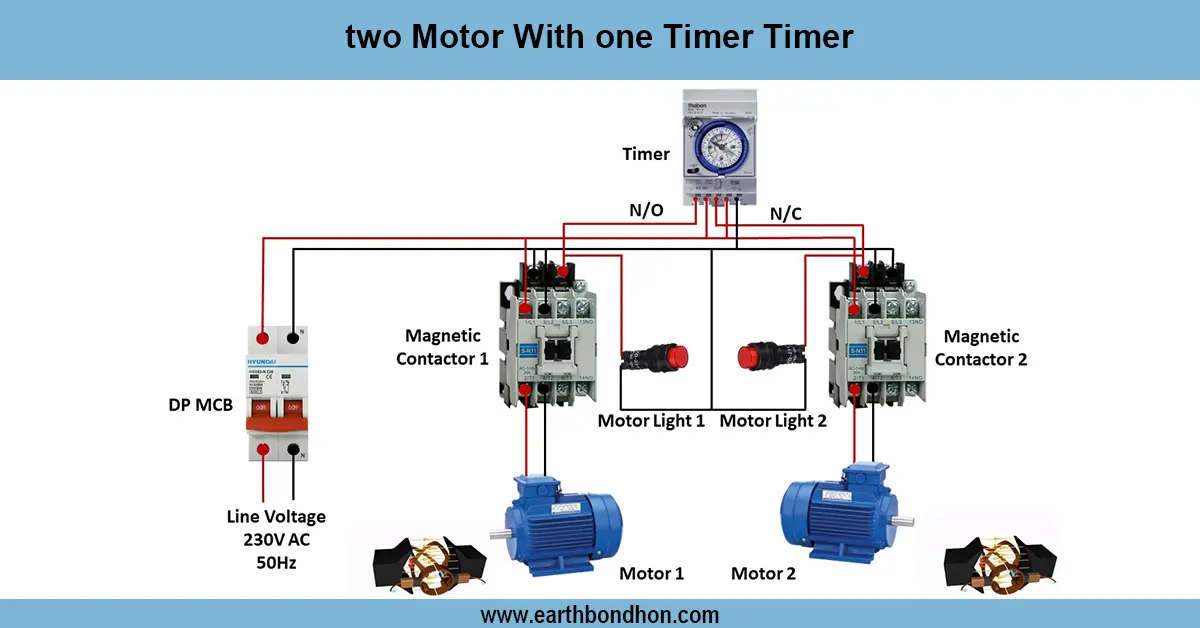
Motor with on delay Timer
Wiring diagram for controlling two motors with a single timer to automate motor operation in industrial, agricultural, or manufacturing applications.
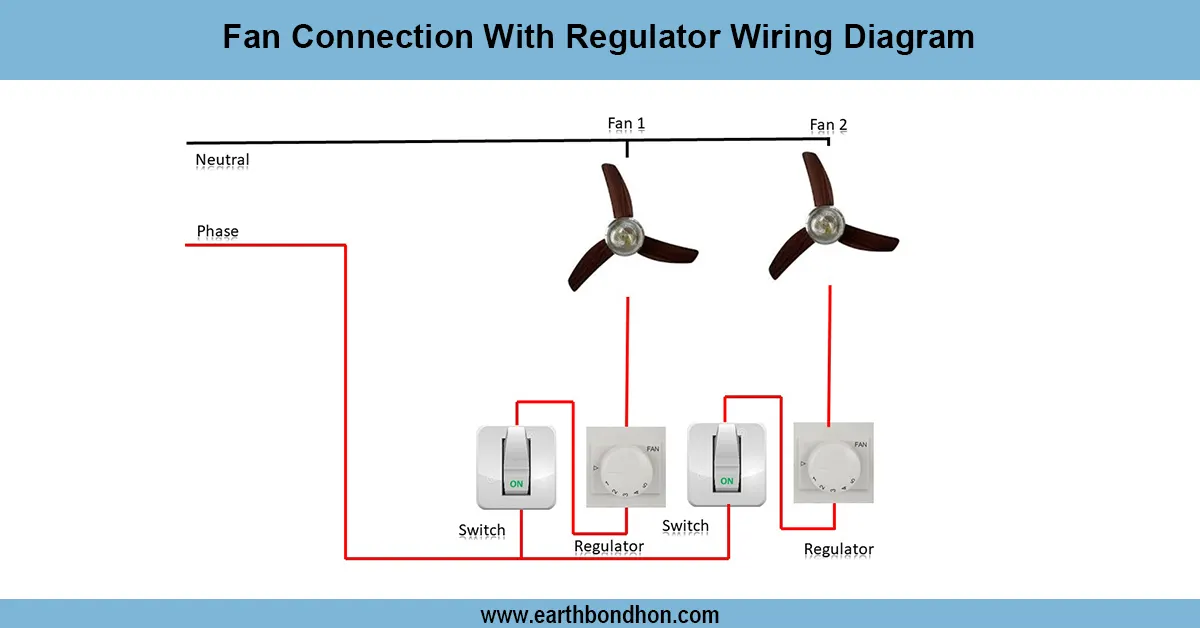
Fan connection with regulator house Wiring Diagram
Learn how to wire a ceiling fan with a regulator at home. Follow this easy wiring diagram and guide for safe and efficient fan installation.
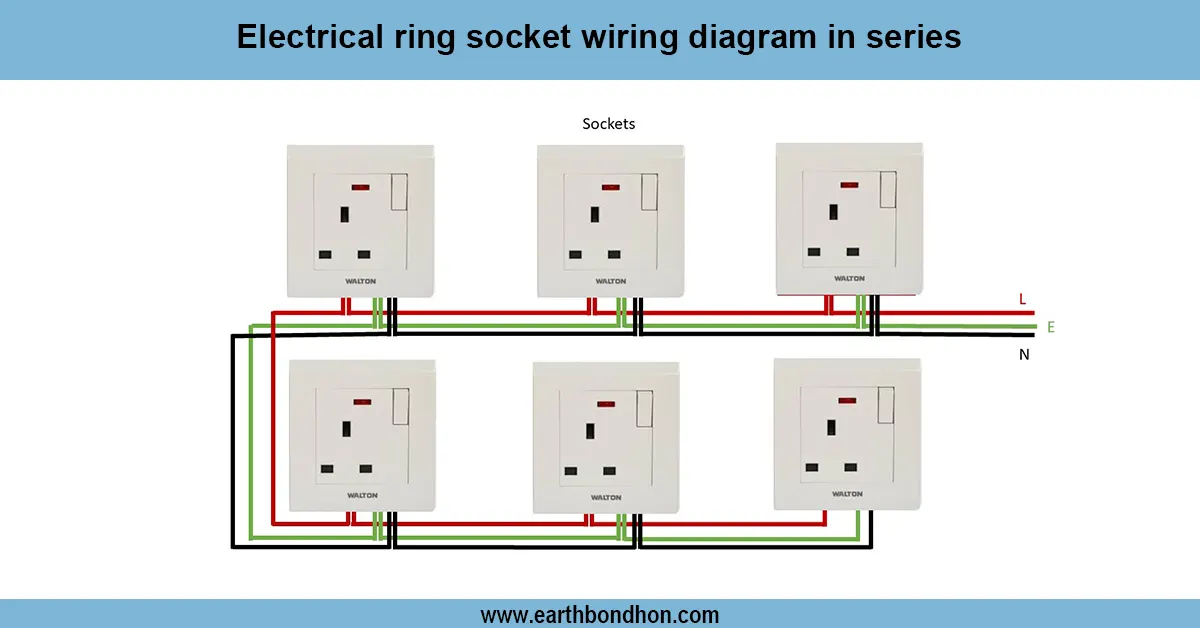
Electrical Ring Socket Connection
Learn how electrical ring socket wiring works in homes. Understand circuit design, safety, and layout in low-voltage electrical installations.
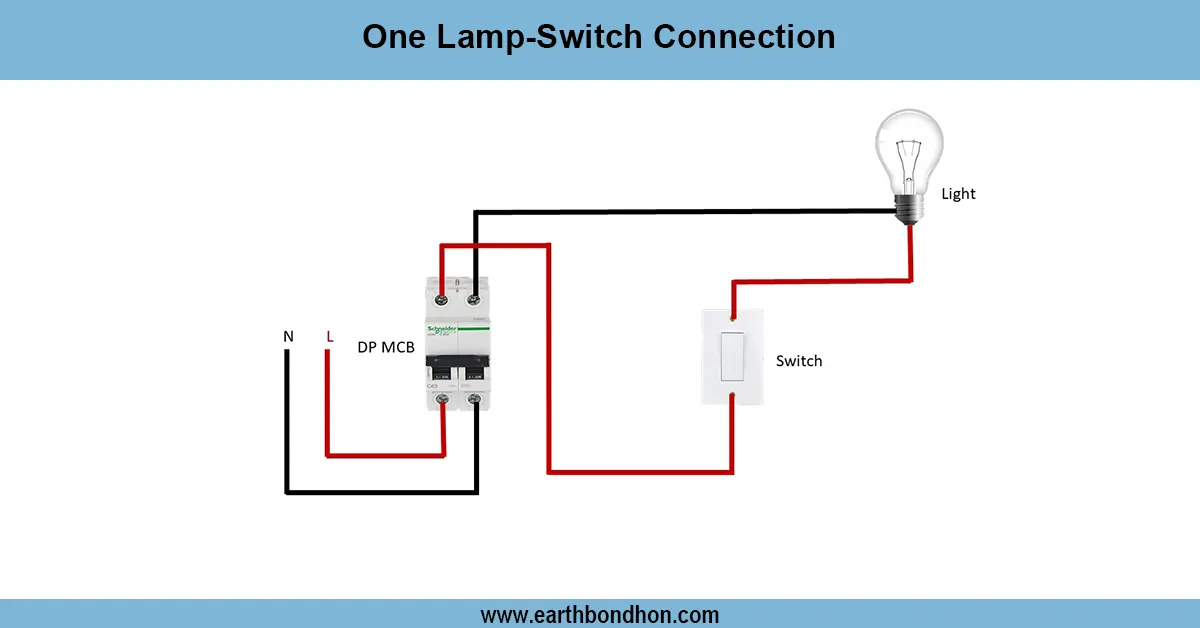
1 Way light Switch wiring Diagram
Learn how to wire a 1-way light switch to control a single light. Ideal for rooms, corridors, and small areas where one switch operates one light.
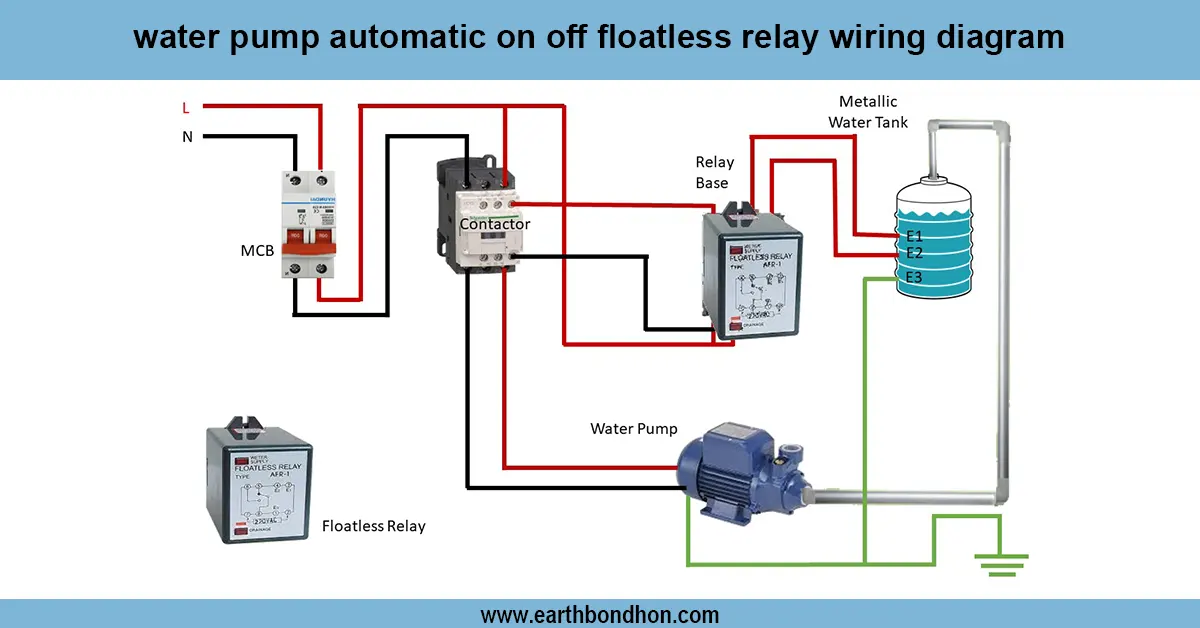
Automatic water level controller wiring
Clear wiring diagram and guide for water pump automatic ON/OFF using a floatless relay, ensuring reliable pump control without mechanical floats.
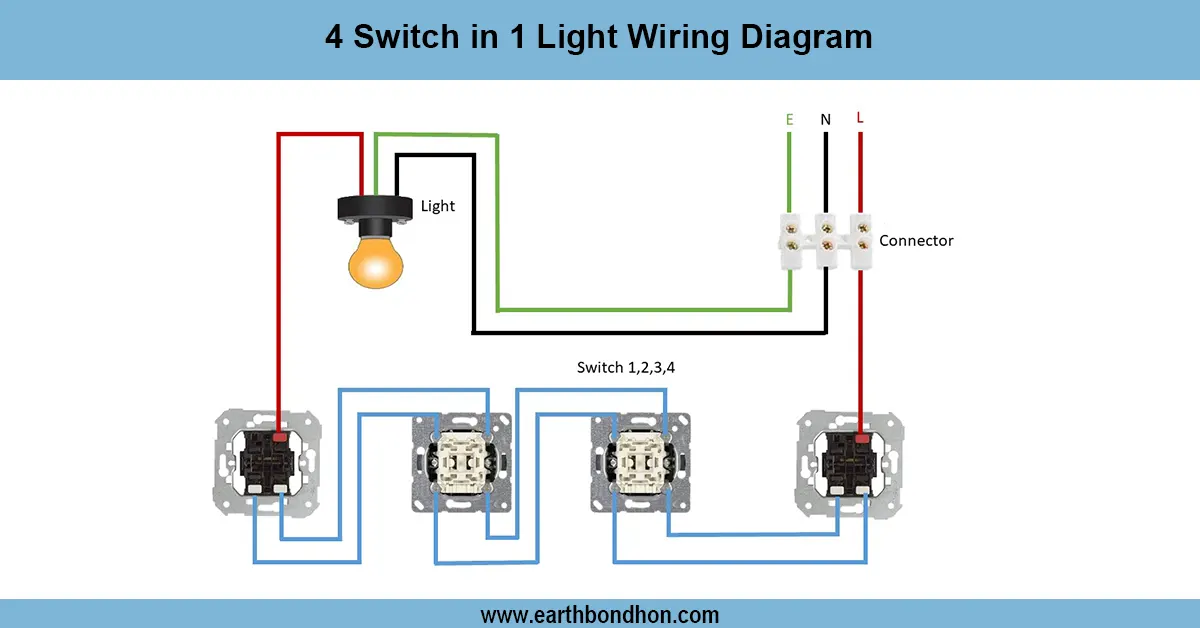
4 Switch 1 Light Control Wiring
A wiring diagram showing how to control one light using four different switches from different locations. Ideal for staircases or long corridors.