

Volts to eV Calculator
Convert volts to electron volts (eV) easily using our accurate online calculator. Ideal for physics, electronics, and educational use. Fast & precise conversions.
Quick Intro: Convert Volts to Electron Volts (eV)
The volts to electron volts (eV) calculator helps you convert electrical potential into energy per elementary charge. This is especially important in physics and electronics, where understanding the energy a single electron gains when exposed to a voltage is crucial. One volt is equal to 1 electron volt per elementary charge (e), and this relationship allows fast, reliable conversions for academic or engineering applications.
Formula to Convert Volts to Electron Volts (eV)
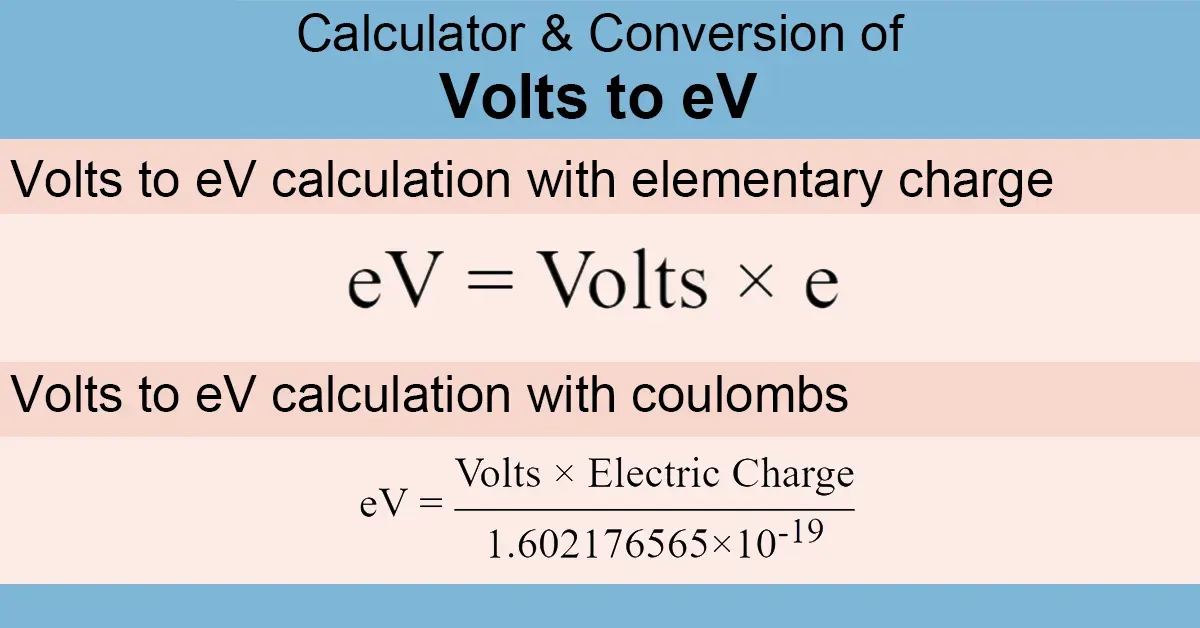
Formula (Elementary charge): eV = V × q
Formula (Charge in Coulombs): eV = (V × Electric Charge) / q
Where:
- eV = energy in electron volts
- V = volts
- q = charge of 1 electron = 1.602 × 10⁻¹⁹ coulombs
Volts to Electron Volts (eV) Calculator Overview
Easily convert volts (V) to electron volts (eV) using our user-friendly calculator. This tool is essential for physics students, engineers, and electronics professionals needing quick and accurate energy conversions. One electron volt (eV) is defined as the amount of kinetic energy gained or lost by a single electron as it moves through an electric potential difference of one volt. Simply input the voltage value, and the calculator will instantly show the equivalent energy in electron volts. This conversion is commonly used in quantum mechanics, particle physics, and semiconductor technology.
Sample Volts to Electron Volts (eV) Canversion Table
| Volts (V) | Electron Volts (eV) |
|---|---|
| 1 | 1.602 × 10⁻¹⁹ |
| 5 | 8.01 × 10⁻¹⁹ |
| 12 | 1.9224 × 10⁻¹⁸ |
Frequently Asked Questions - Volts to eV Calculator:
What is an electron volt (eV)?
An electron volt is the energy gained by one electron moving through a potential difference of one volt.
How do I convert volts to eV?
Multiply volts by the elementary charge (1.602×10⁻¹⁹ C).
Is volts to eV a direct conversion?
Yes, it's a linear conversion using the charge of an electron.
Where is volts to eV conversion used?
Used in physics, electronics, and quantum mechanics.
What is the elementary charge?
The charge of one electron: 1.602 × 10⁻¹⁹ coulombs.
Is eV a unit of voltage?
No, eV is a unit of energy, not voltage.
Can I use this calculator for science experiments?
Yes, it’s suitable for academic and lab work.
How precise is this conversion?
It’s highly accurate using a standard constant value.
Is this calculator free to use?
Yes, it’s 100% free and easy to use.
Does temperature affect eV calculations?
Not in basic conversions, but it may in physical experiments.
Related Posts
current imbalance calculator
Calculate percentage current imbalance in three-phase systems using % I imb= {(Imax - Iavg) / Iavg} * 100
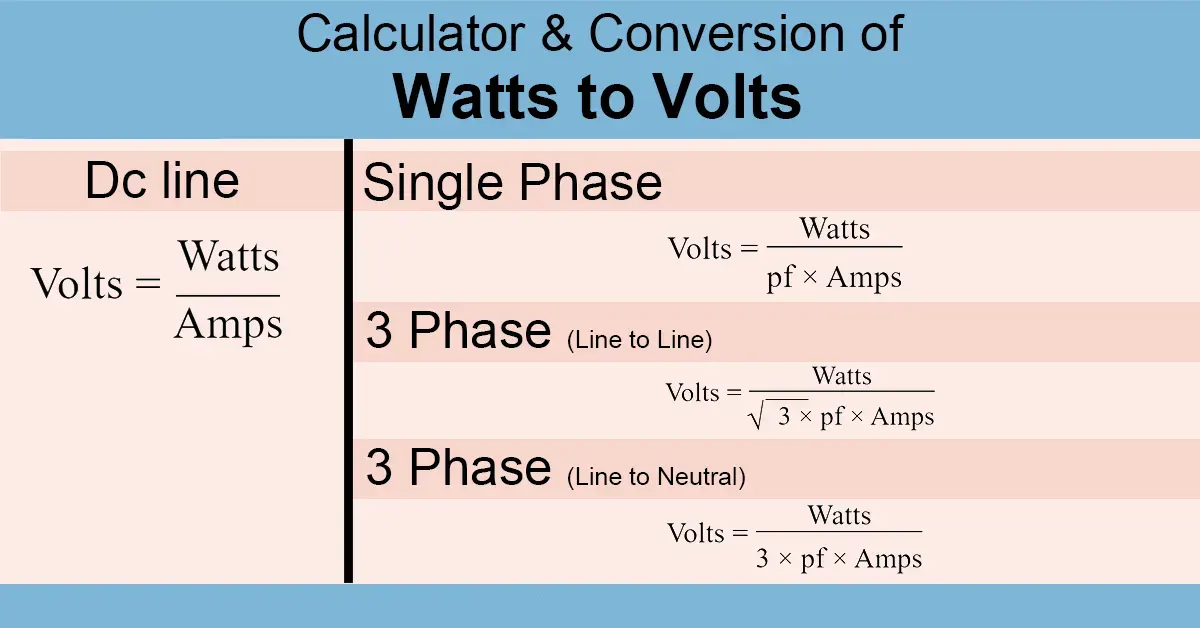
Watts to Voltage Calculator
Use this free watt to voltage calculator to convert power to voltage based on current. Supports DC, AC single-phase, and three-phase systems with power factor.
current calculator
Easily calculate electrical current using Ohm’s Law:𝐼= 𝑉/R, with instant results for amps from voltage, resistance, or power.
No-load voltage calculator
Calculate the no-load (open circuit) voltage of generators, transformers, or other sources using EMF equations, winding data, and test parameters.
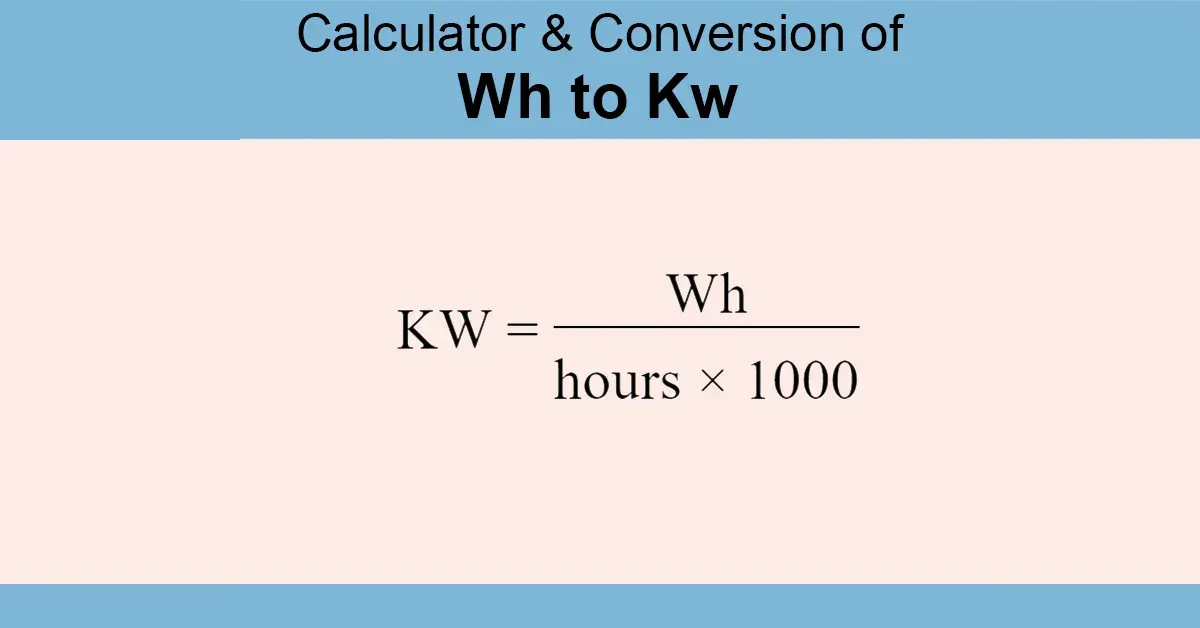
Wh To KW Calculator
Easily convert watt-hours to kilowatts using this free Wh to kW calculator. Enter energy (Wh) and time (hours) to get kW. Ideal for electrical and energy calculations.
thermocouple voltage calculator
Convert thermocouple millivolt readings to temperature or vice versa using standard type-specific reference tables and equations for accurate measurements.