

No-load voltage calculator
Calculate the no-load (open circuit) voltage of generators, transformers, or other sources using EMF equations, winding data, and test parameters.

transformer no load voltag
An open-circuit voltage or no-load voltage is the voltage at which a power source is with no load present. This can be easily done with this calculator.
Formula & Table Summary:
Formula:
\( V_{NL} = E = 4.44 \times f \times N \times \Phi \)
no load voltage calculator
The No Load Voltage Calculator calculates the open-circuit voltage of an electric machine, or source without a load connected. It is a consideration of both the design and testing of generators, alternators, transformers, and other electrical systems, since it is close but not quite the same as the full-load voltage. The generated EMF and winding properties, and residual magnetism in the machine, determine the no-load voltage. The rated voltage, flux, and frequency can be found in alternators and transformers. This calculator returns the value of the open circuit voltage immediately by entering the crucial values such as EMF constant, velocity, and the number of turns. This can be used to predict performance and troubleshooting by engineers, electricians, and students without subjecting them to actual load.
no load voltage formula
| Frequency (Hz) | Turns (N) | Flux (Wb) | No-Load Voltage (V) |
|---|---|---|---|
| 50 | 100 | 0.02 | 444 |
| 60 | 100 | 0.02 | 532.8 |
| 50 | 200 | 0.02 | 888 |
| 50 | 100 | 0.01 | 222 |
Frequently Asked Questions - No-load voltage calculator:
What is no-load voltage?
The voltage measured when a source has no connected load.
Where is it used?
In generators, alternators, transformers, and batteries.
Why is it higher than full-load voltage?
Because there is no voltage drop due to load current.
Does frequency affect it?
Yes, directly proportional in AC machines.
Can I measure it directly?
Yes, with a voltmeter and no connected load.
What causes no-load voltage to drop?
Loss of residual magnetism or winding faults.
What is the formula?
VNL = 4.44 × f × N × Φ.
Can I use this for DC generators?
Yes, but formula differs slightly.
Is it safe to run no-load for long?
Generally yes, but not for all machines.
Does temperature affect it?
Yes, as it changes winding resistance.
Related Posts
Norton current calculator
Calculate Norton equivalent current from short-circuit analysis, load removal tests, or Thevenin parameters for DC and AC circuits.
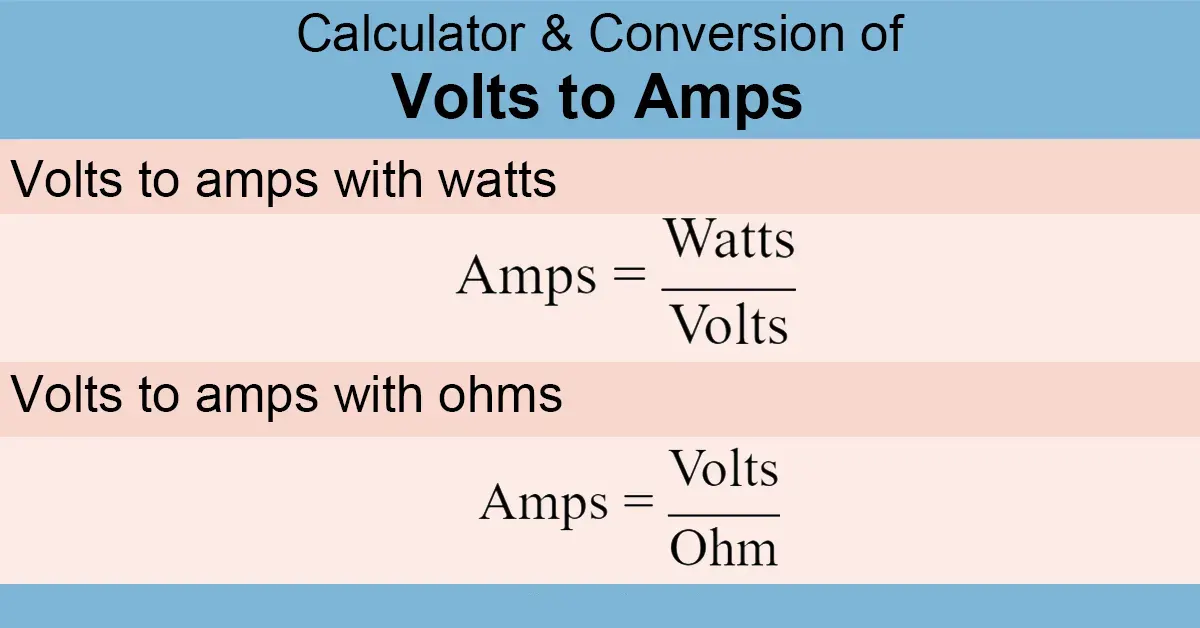
Volts to Amps Calculator
Use this free volts to amps calculator to convert voltage and power (watts) into current (amps). Ideal for electrical circuit calculations and quick conversions.
neutral current calculator
Compute neutral current from unbalanced 3-phase line-to-neutral loads. Enter Ia, Ib, Ic (A) to get In (A) instantly—plus formula, sample table, and FAQs.
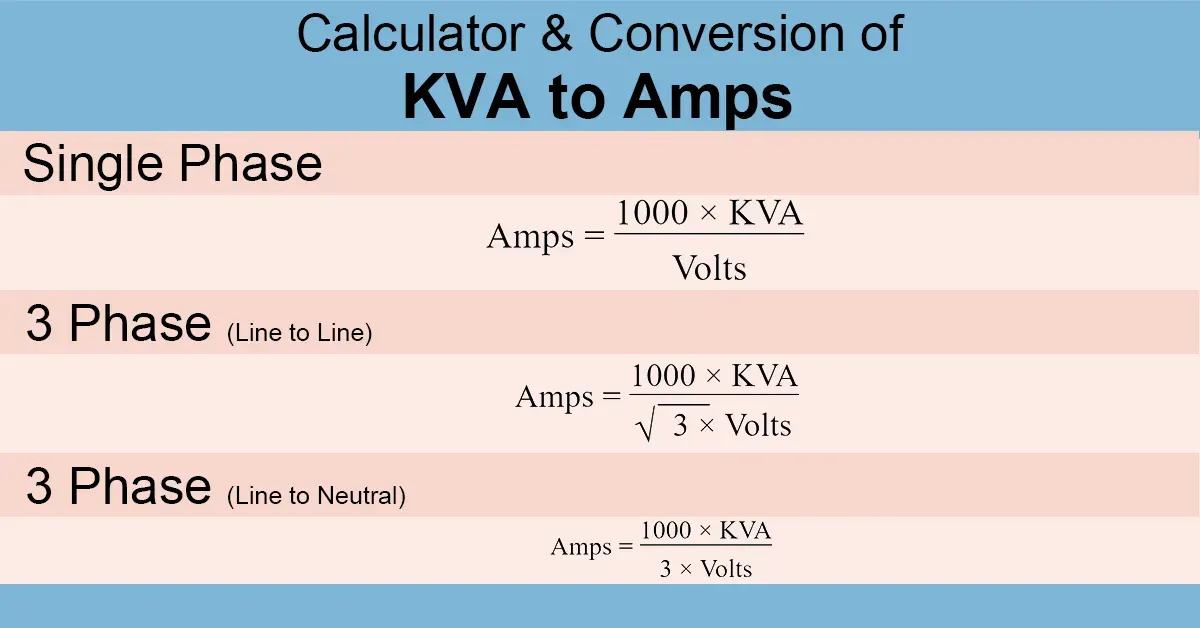
kVA to Amps Calculator
Quickly convert kVA to Amps for single-phase and three-phase systems. Use our easy calculator for 120V, 230V, 400V, and more. Ideal for engineers and electricians.
power to current calculator
Convert electrical power (W) to current (A) for DC, single-phase AC, and three-phase AC. Enter power, voltage, and power factor to get accurate RMS or DC current.
inverter voltage calculator
Easily calculate the inverter output voltage from the DC input and efficiency. Perfect for solar, battery, and off-grid power systems.