


Single Phase House wiring circuit diagram
Simple 3-bulb house wiring diagram showing connections of bulbs with switches and power supply for safe and efficient home lighting control.
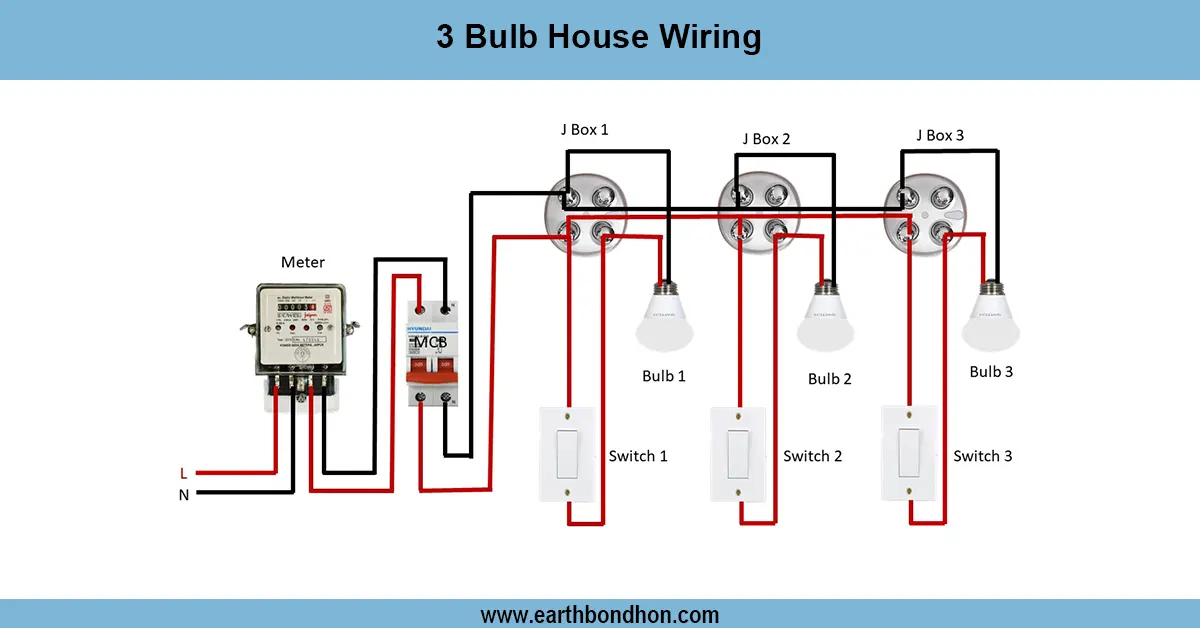
3 bulb switch wiring
A 3-bulb home wiring diagram illustrates the wiring of three independent bulbs and switches to one power supply, enabling the user to control them independently since separate power sources are used to independently turn them on/off with ease of harnessing the power lighting in the house.
3 Bulb House Wiring Summary & Components:
Power Supply: Single phase AC supply (Live, Neutral, Earth)
Switches: One switch per bulb for individual control
Bulbs: Connected between switched live and neutral
Safety: Proper grounding and insulation mandatory
home lighting circuit diagram
The three-bulb house wiring system enables one to control three bulbs using individual switches and a common power source. This wiring is a widely accepted system in houses having lighting systems with more than one light in the room. The bulbs have separate controls and switches in the sense that they are each attached to different switches. Wiring is done using live conductor (phase), neutral, and earth, which are connected with respect to electricity standards to provide safety. Electrical hazards can be avoided by having proper insulation and grounding. This guide explains the method of wiring bulbs, switches, and the power lines effectively, whilst ensuring the safety of the electricity in the residential lights.
residential lighting wiring
| Component | Connection | Description |
|---|---|---|
| Live Wire (L) | Connected to all switches | Supplies power to switches controlling bulbs |
| Switches | One per bulb | Controls power flow to each bulb |
| Bulbs | Connected to switched live and neutral | Emit light whenthe switch is ON |
| Neutral Wire (N) | Common connection to all bulbs | Completes the electrical circuit |
| Earth Wire (E) | Connected to bulb fixtures and metal parts | Ensures safety from electric shock |
Frequently Asked Questions - Single Phase House wiring circuit diagram:
How do I wire 3 bulbs with separate switches?
Connect live wire to each switch, then to each bulb, with a common neutral and earth.
Can one switch control multiple bulbs?
Yes, but wiring differs; here each bulb has its own switch.
Is grounding necessary for bulb wiring?
Yes, for safety to prevent electric shocks.
What type of wire is used for house lighting?
Typically copper wire with appropriate insulation and gauge.
Can I use LED bulbs in this wiring?
Yes, wiring is the same for LED or incandescent bulbs.
What voltage is used in house wiring?
Usually single phase AC at 110V or 230V depending on country.
How to test if bulb wiring is correct?
Use a voltage tester or turn on switches to check bulb illumination.
Can I add more bulbs to this circuit?
Yes, by extending wiring with proper load calculation.
What happens if neutral is disconnected?
Bulbs won’t light and it can be hazardous.
Who should do house wiring?
Qualified electricians should handle electrical wiring for safety.
Related Posts
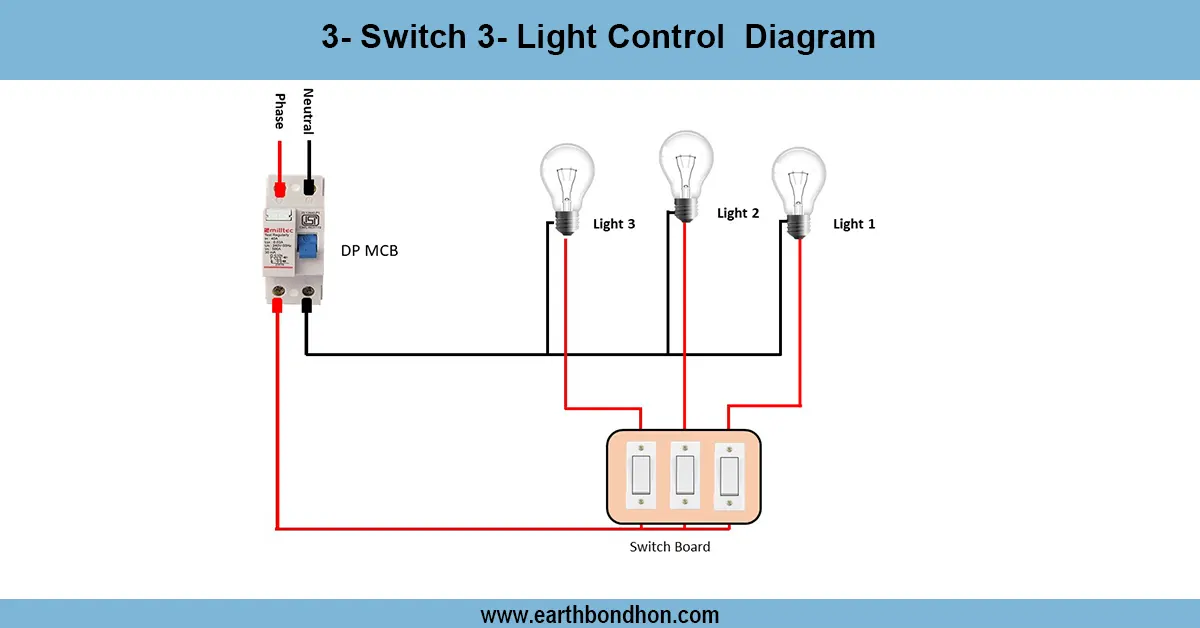
3 Bulbs And 3 Switches Diagram
Learn how to wire 3 lights with 3 individual switches. Easy step-by-step diagram, formula summary, and connection table for beginners and professionals.
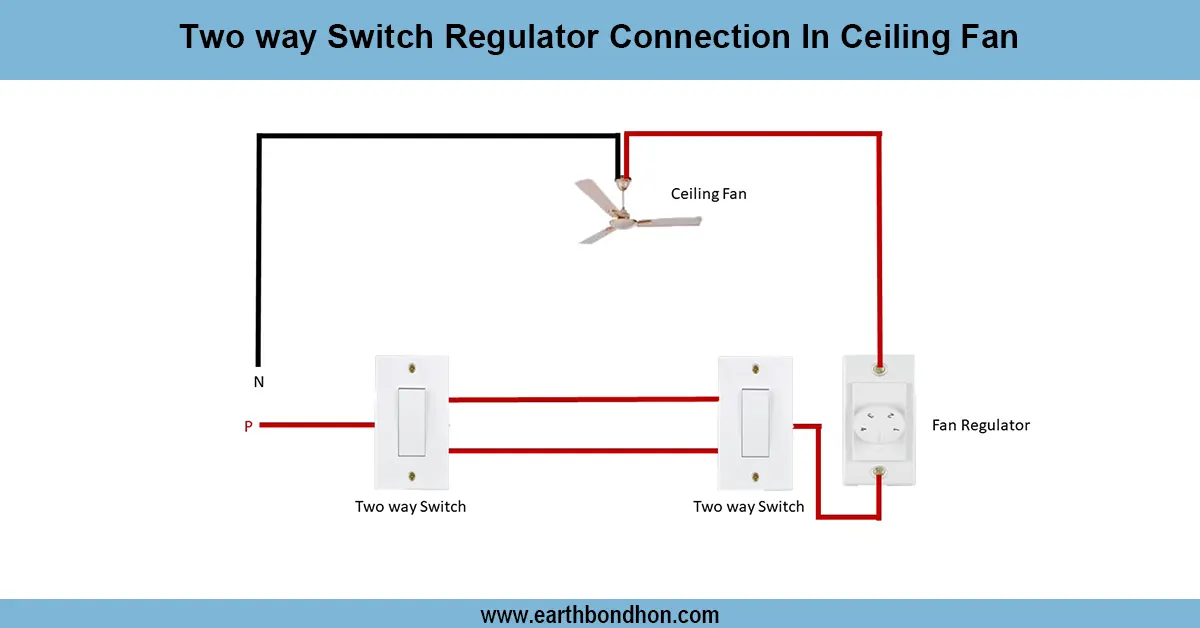
Ceiling Fan Regulator connection
Wiring diagram showing how to connect a two way switch with a regulator to control ceiling fan speed and ON/OFF from two locations.
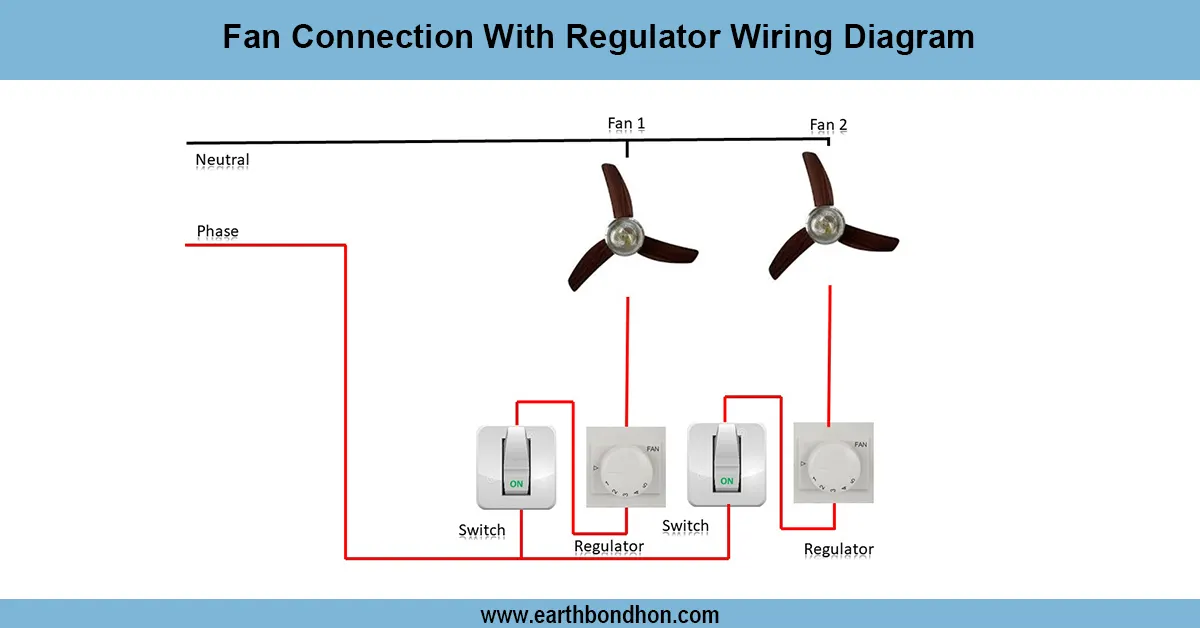
Fan connection with regulator house Wiring Diagram
Learn how to wire a ceiling fan with a regulator at home. Follow this easy wiring diagram and guide for safe and efficient fan installation.
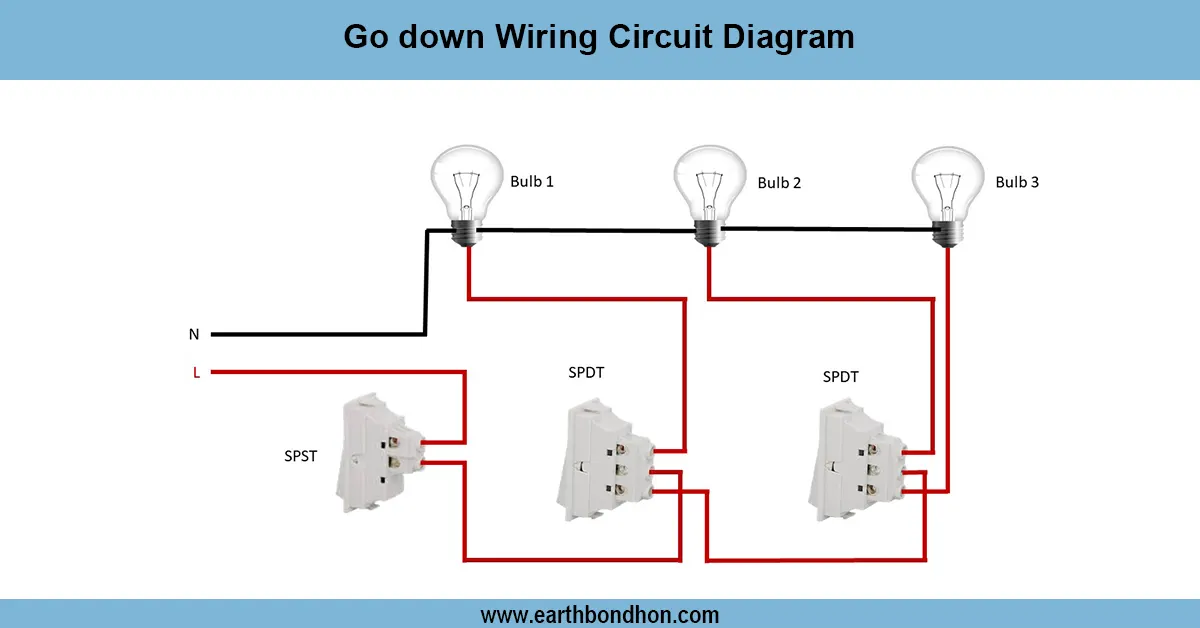
Go down Wiring Circuit Diagram
Learn the Go Down wiring circuit diagram with clear steps for safe, efficient electrical wiring. Perfect for warehouses and storage areas.
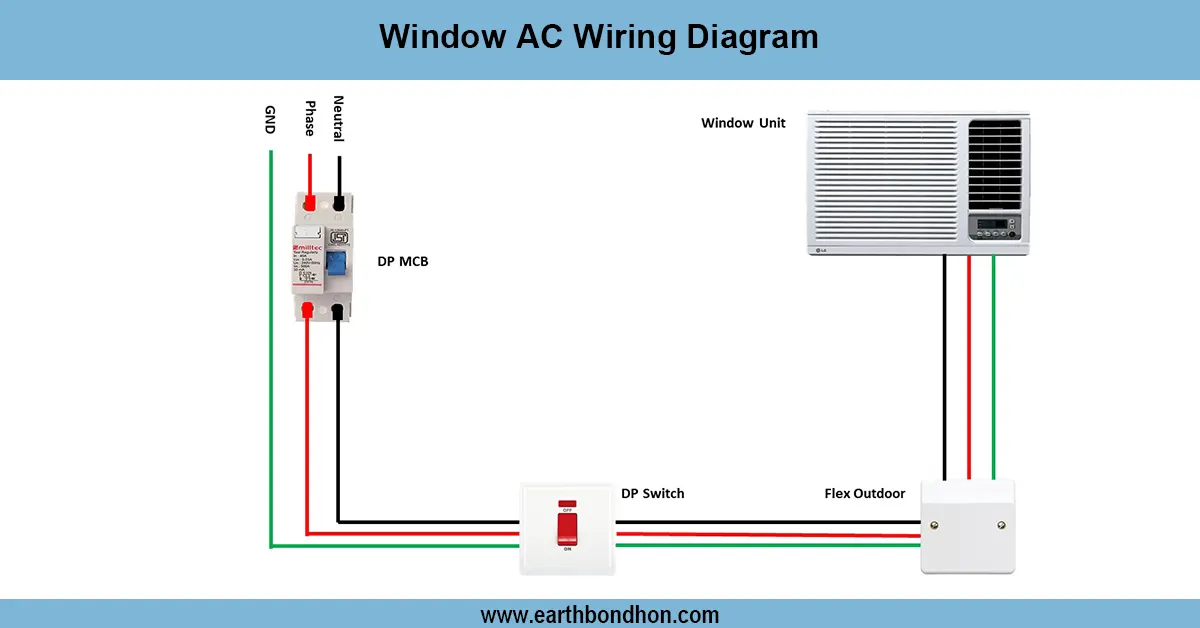
Window AC wiring
Detailed wiring diagram for window AC units covering power connections, thermostat wiring, compressor, fan motor, and safety components for safe operation.

Selector Switch in Voltmeter Wiring
Learn how to wire a voltmeter with a 2-position selector switch to measure voltage from two sources or points safely and accurately.