



Day Night Light Sensor Switch Circuit
Learn how to wire a day night light sensor switch for automatic lighting control. Save energy and improve convenience with this simple guide and diagram.
electrical wiring single phase
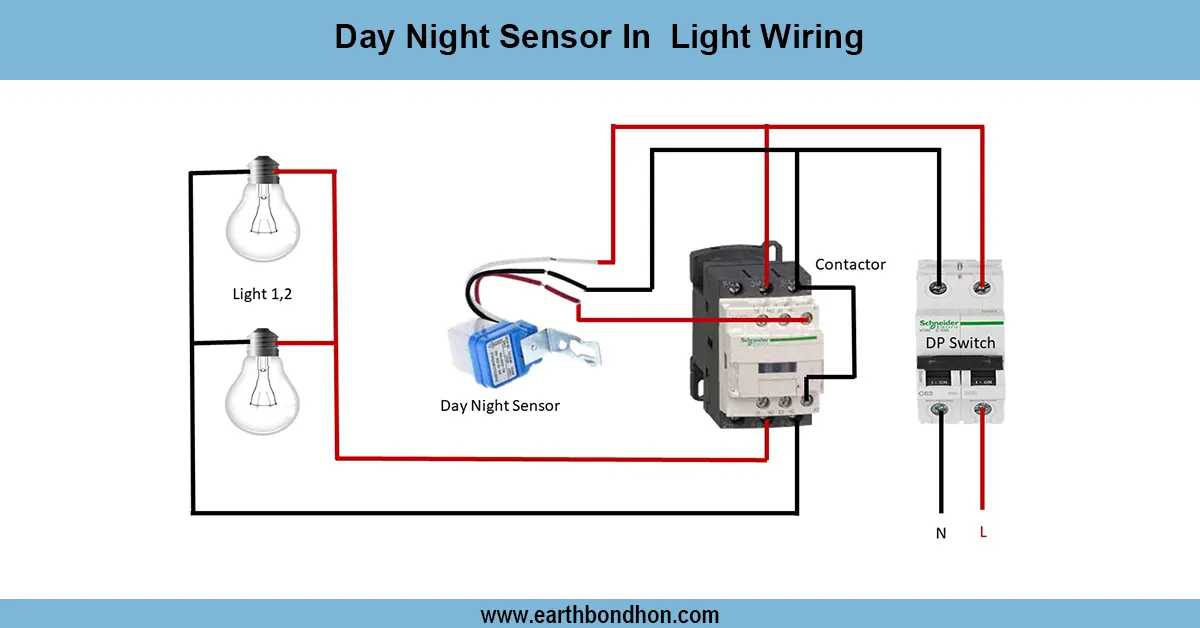
A smart device is a day-night light sensor switch that switches the lights on at night and off during the day. It deploys a photoelectric sensor to monitor the relative brightness, which best suits the application of outdoor, street, and garden lighting. Light automation helps save energy as well as encouraging more safety: lights not used are turned off. Connection of the live and neutral wires to the input terminals of the sensor and the output to the light fitting is performed during installation. In the majority of the units, one can adjust at lux level to regulate the switching of the lights on or off depending on the light intensity. Modeled weatherproof can be used outside.
Formula & Table Summary:
Light Control Logic:
If Ambient_Light < Lux_Setting → Light_ON; else Light_OFF
day night sensor wiring diagram
A day light night switch is an intelligent switch that switches lights during the night and off during the daylight. It has the capability of sensing the brightness around it with the use of a photoelectric sensor, which makes it suitable in outdoor lighting, street, and garden lighting. Automation of light control will help curb energy waste and safety by making the lights active only when they are identified to be in use. Installation is done by connecting the live and the neutral wire to the input posts of the sensor and witting up the output terminal to the light fitting. The majority of the units can adjust to lux levels to turn on and off lights according to brightness. Outdoor consumption should be achieved by weatherproof models.
automatic light switch circuit
| Lux Setting | Approx. Time On | Use Case |
|---|---|---|
| 10 Lux | Dusk | Street lighting |
| 30 Lux | Early Evening | Garden lights |
| 50 Lux | Cloudy Day | Porch lighting |
Frequently Asked Questions - Day Night Light Sensor Switch Circuit:
What is a day night light sensor switch?
A device that turns lights on at night and off in daylight using a light sensor.
How does a day night sensor work?
It detects ambient light levels and switches the connected load accordingly.
Can I use a day night sensor with LED lights?
Yes, most models are compatible with LED lighting systems.
Does a day night sensor need a neutral wire?
Many models do, but two-wire versions are also available.
Where should I install the day night sensor?
In a location with clear natural light exposure but shielded from artificial light.
Can I adjust the light sensitivity of the sensor?
Yes, most units have an adjustable lux setting.
Is wiring a day night sensor safe for beginners?
If unsure, hire a certified electrician to ensure safety and compliance.
What voltage do day night sensors support?
Commonly 110V–240V AC, check product specifications.
Can it be used for outdoor lighting?
Yes, if the sensor is rated for outdoor use.
Will a day night sensor save electricity?
Yes, it prevents lights from staying on unnecessarily during daylight.
Related Posts
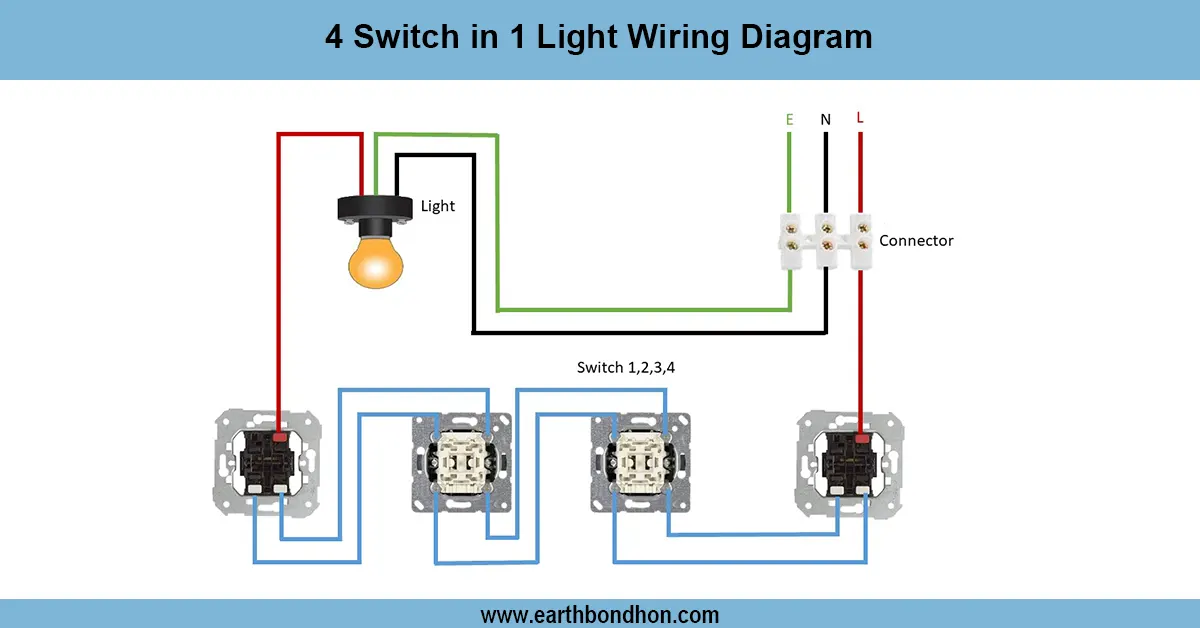
4 Switch 1 Light Control Wiring
A wiring diagram showing how to control one light using four different switches from different locations. Ideal for staircases or long corridors.
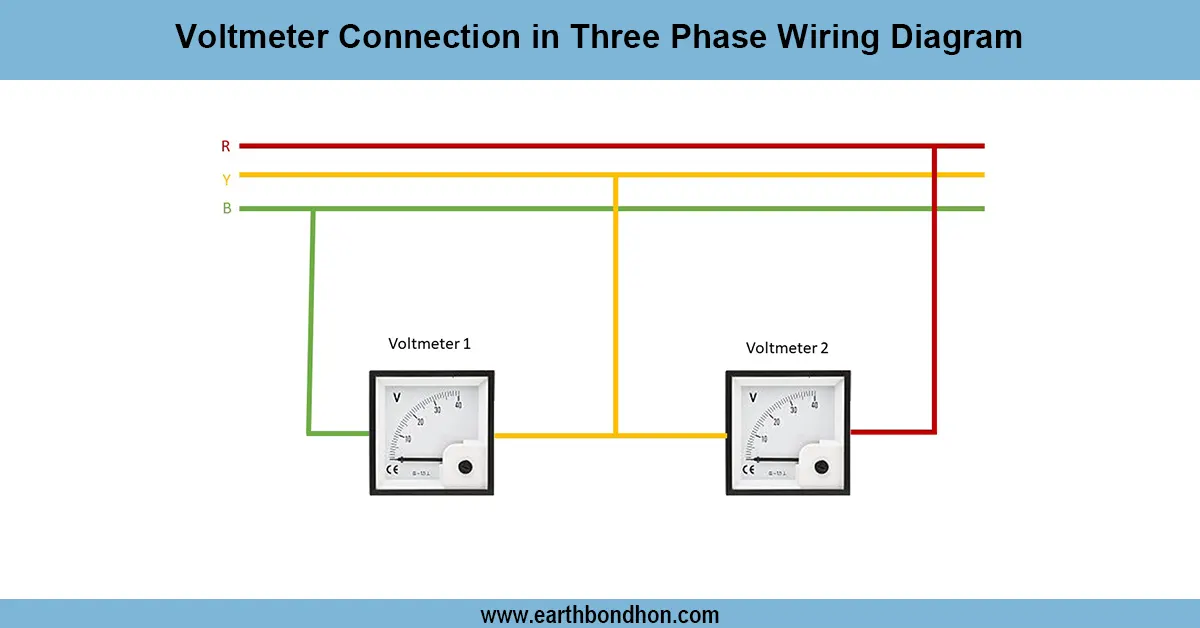
Three phase voltmeter connection
volts times the square root of 3, which happens to be rounded off to 1.732. For 2 lines each carrying 120 volts, the calculation for this is 120 volts times 1.732, and the result is rounded up to 208 volts.
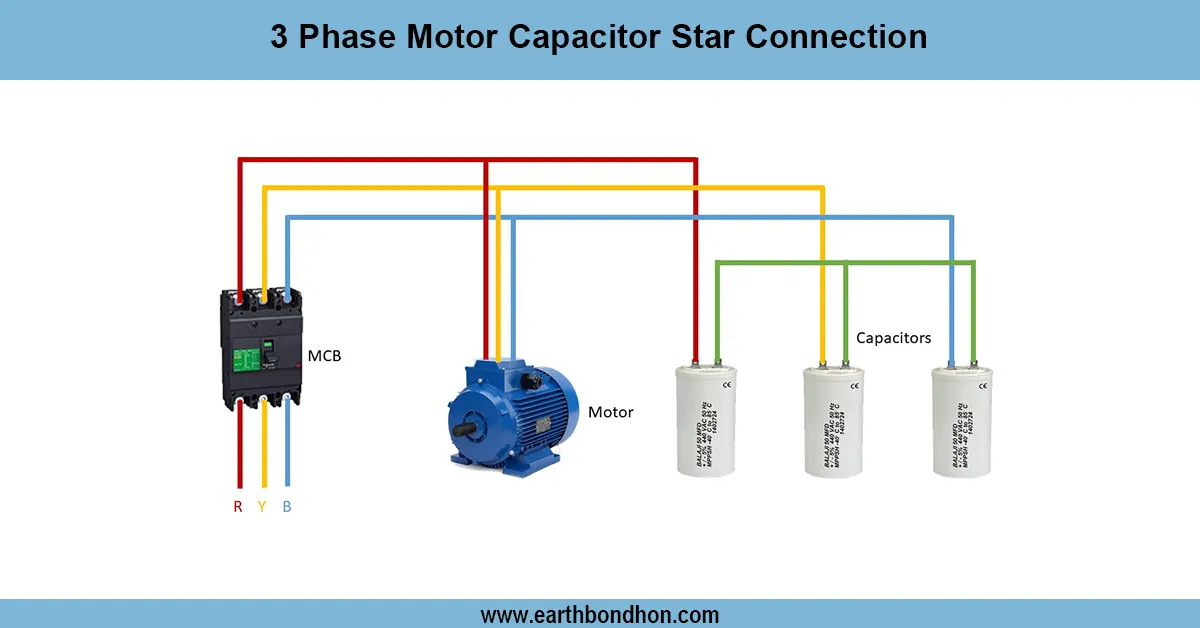
3 Phase Motor Star Connection Diagram
Learn 3-phase motor capacitor star connection wiring for starting and running capacitors, ensuring efficient motor operation with clear wiring steps.

4 Gang Switch 4 Bulb Wiring
Learn how to wire a 4-gang switch to control 4 individual bulbs. Ideal for multi-light room setups with simple step-by-step wiring guide and diagram.
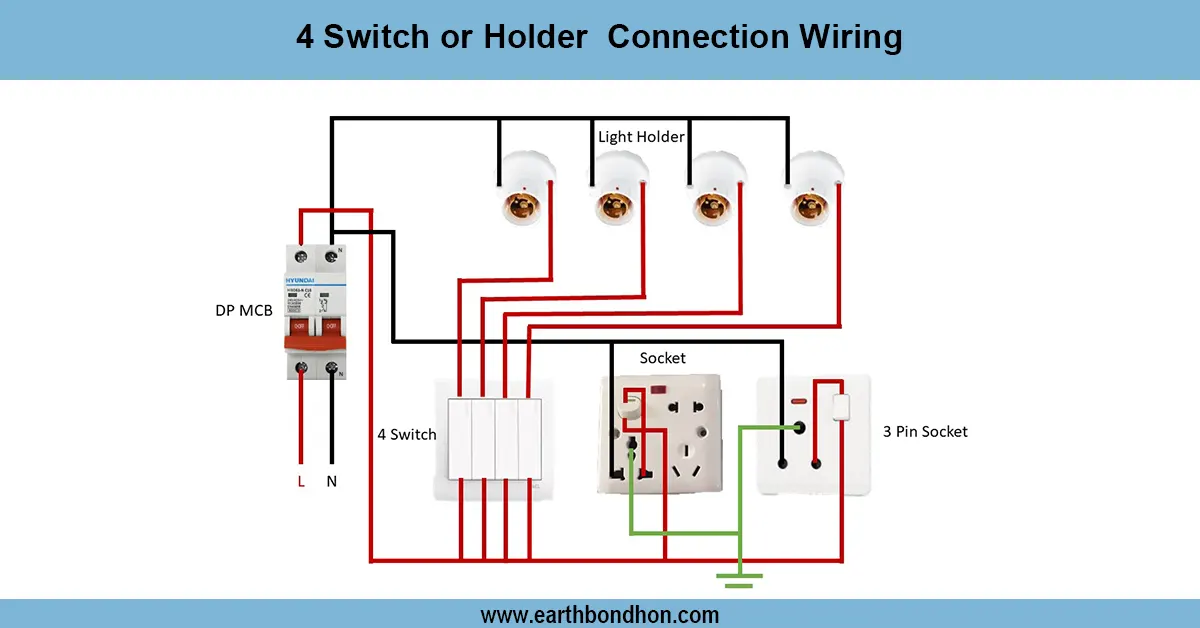
4 Switch Holder Connection Wiring
Learn how to wire four switches to four separate lamp holders for independent control in any room. Step‑by‑step guide with safety tips and cable size recommendations.
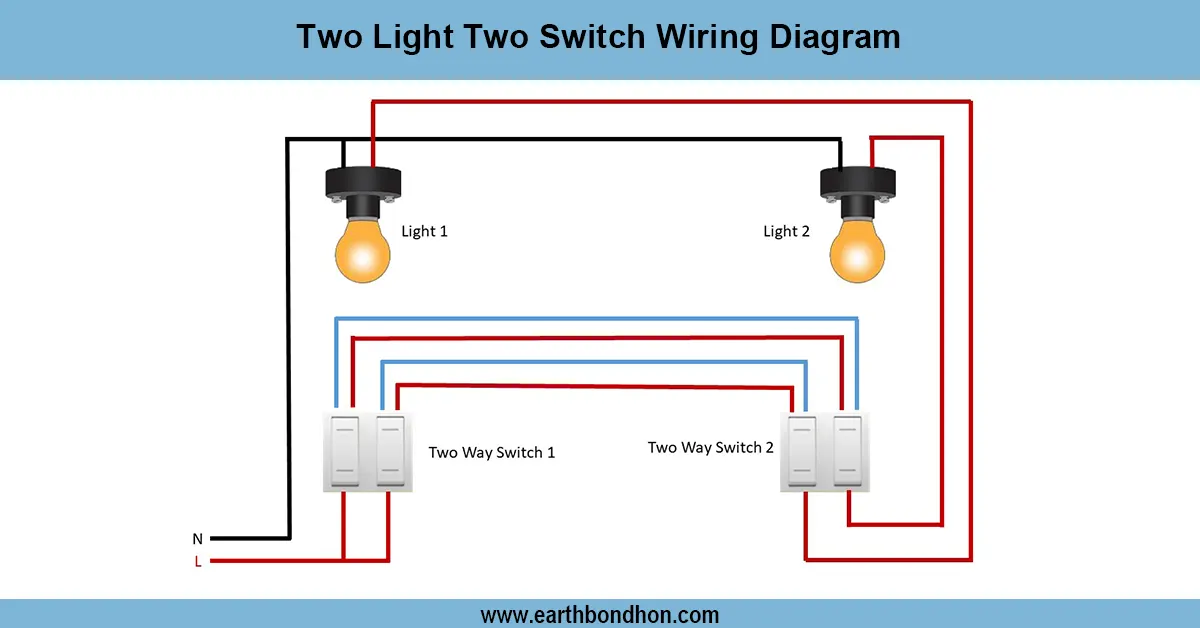
1 Light controlled by 2 switches
Control one light using two switches located at different positions with a simple two-way switch wiring setup. Ideal for hallways, staircases, and bedrooms.