

1 Way light Switch wiring Diagram
Learn how to wire a 1-way light switch to control a single light. Ideal for rooms, corridors, and small areas where one switch operates one light.
basic light switch wiring
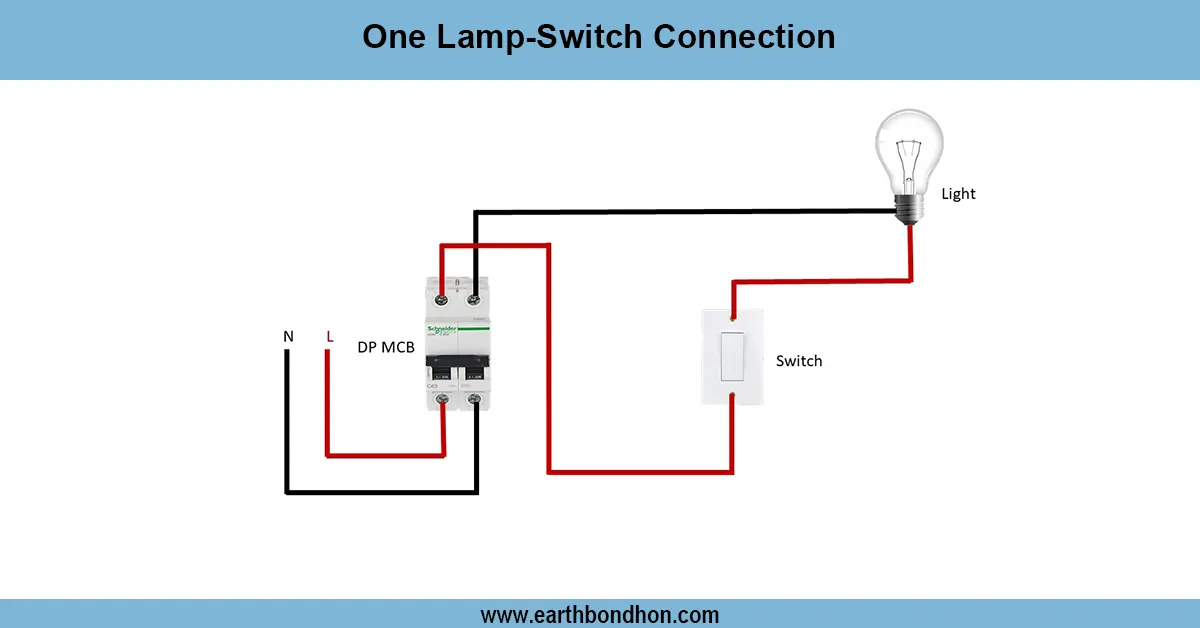
A 1-way light switch wiring diagram is a fundamental setup that allows control of a single light fixture from one switch. This simple and efficient configuration is widely used in home and office lighting. The switch interrupts or completes the live wire circuit to turn the light on or off. It is the most basic lighting control method, ideal for small spaces.
Formula & Table Summary:
Concept Formula:
Live → Switch → Light → Neutral| Component | Connection Role |
|---|---|
| Power Source | Provides Live and Neutral wires |
| Switch | Connects/disconnects Live wire |
| Light Bulb | Receives Live (from switch) + Neutral |
| Neutral Wire | Direct from source to bulb |
1 way light switch wiring
A 1-way light switch wiring is the most common and basic circuit used to control a single light from one switch. It’s commonly installed in small rooms, bathrooms, porches, or any area where only one entry point and one light fixture are present. The circuit is simple: the live (phase) wire passes through the switch to the light, and the neutral wire connects directly to the other terminal of the light bulb. When the switch is turned on, it completes the circuit and powers the light. This wiring method is suitable for both LED and incandescent bulbs and is beginner-friendly. Using proper safety measures and tools, such as a tester and wire stripper, you can install this circuit easily. It’s an essential concept in residential electrical wiring and forms the base for more advanced circuits like two-way or intermediate switching systems.
light switch circuit diagram
| Input (Switch Position) | Output (Light Status) |
|---|---|
| ON | Light ON |
| OFF | Light OFF |
Frequently Asked Questions - 1 Way light Switch wiring Diagram:
What is a 1-way switch?
A switch that controls one light from one location.
Where is this wiring used?
Used in single-entry rooms, bathrooms, and closets.
How many wires are needed?
At least two: live and neutral.
Does the neutral wire go to the switch?
No, it connects directly to the bulb.
Can I use LED with this?
Yes, it's compatible with LED bulbs.
Is this safe for DIY?
Yes, with proper precautions and tools.
What tools are required?
Screwdriver, wire stripper, tester, tape.
Can I use this for a fan?
Use with fan only if rated appropriately.
Why isn’t my light turning on?
Check connections, bulb, and switch operation.
What is the symbol for 1-way switch?
It’s usually marked with '1' or 'SP' on diagrams.
Related Posts
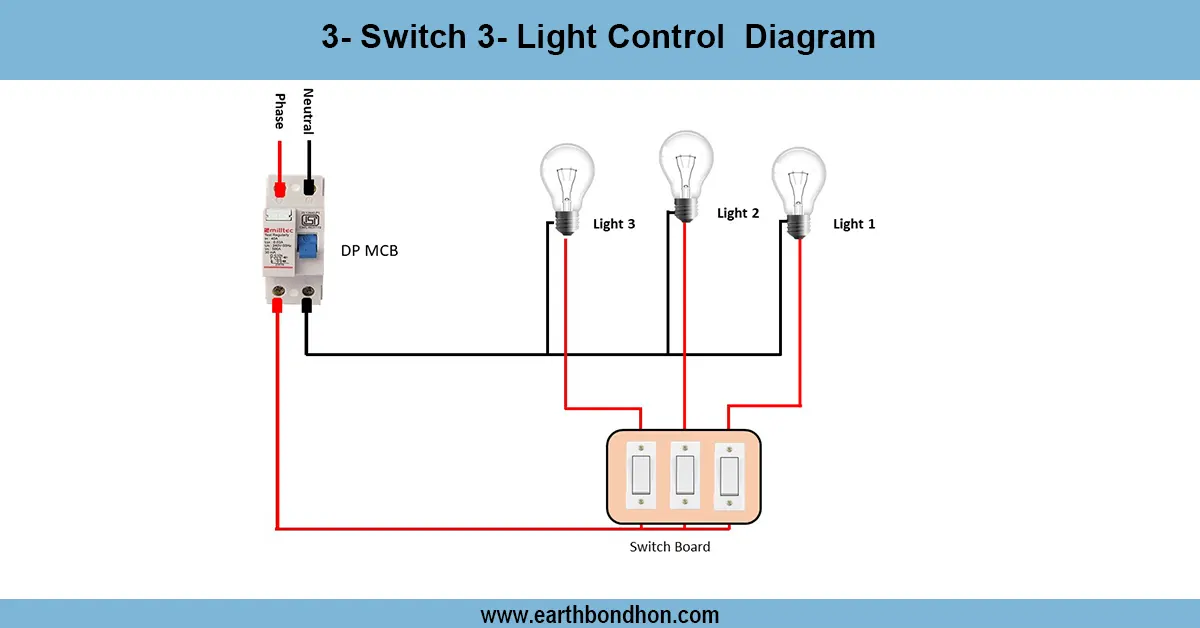
3 Bulbs And 3 Switches Diagram
Learn how to wire 3 lights with 3 individual switches. Easy step-by-step diagram, formula summary, and connection table for beginners and professionals.
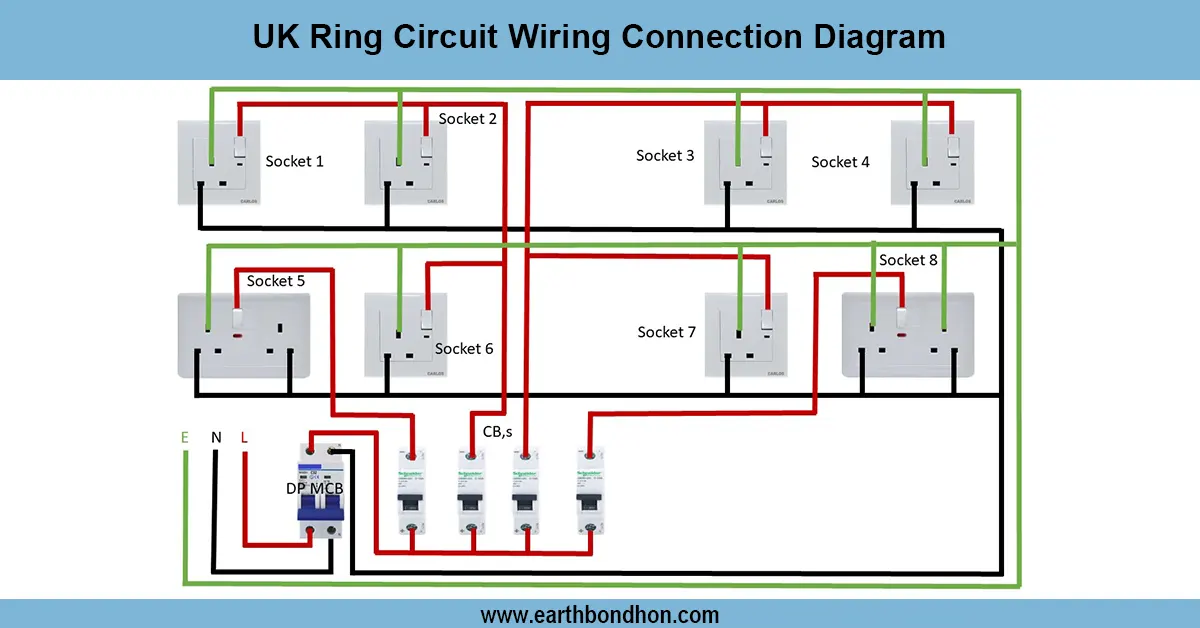
Electrical Ring socket connection
UK ring circuit wiring diagram showing socket connections, protective devices, and proper wiring method for safe and efficient power distribution.
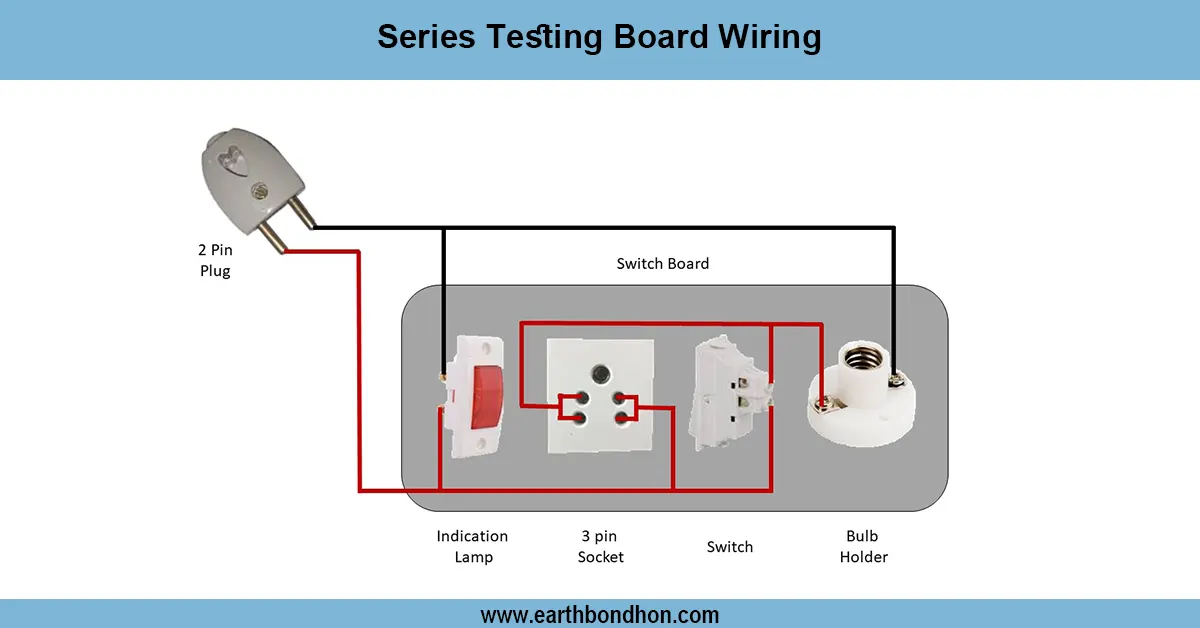
Series Testing Board Connection
Learn how to wire a series testing board with multiple sockets and bulbs. Ideal for electricians and students testing AC appliances or basic electric setups.

4 Gang Switch 4 Bulb Wiring
Learn how to wire a 4-gang switch to control 4 individual bulbs. Ideal for multi-light room setups with simple step-by-step wiring guide and diagram.
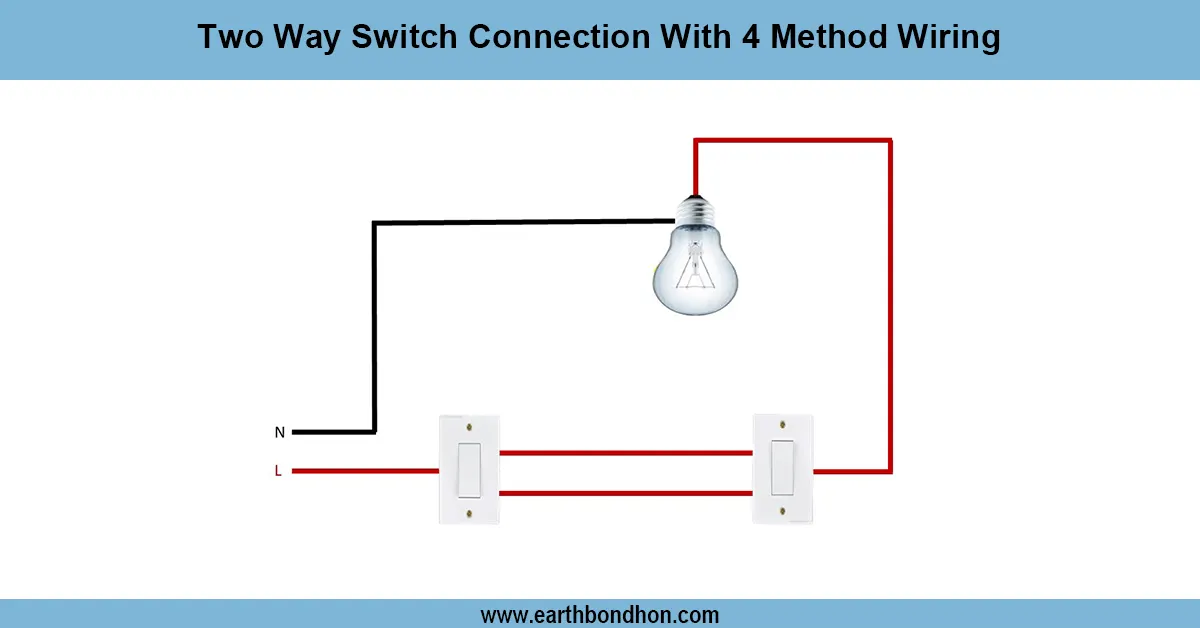
2 Way Light Switch wiring 4 Methode
A 2-way light switch wiring diagram helps control a single light from two different locations. Common in staircases, long hallways, or large rooms.
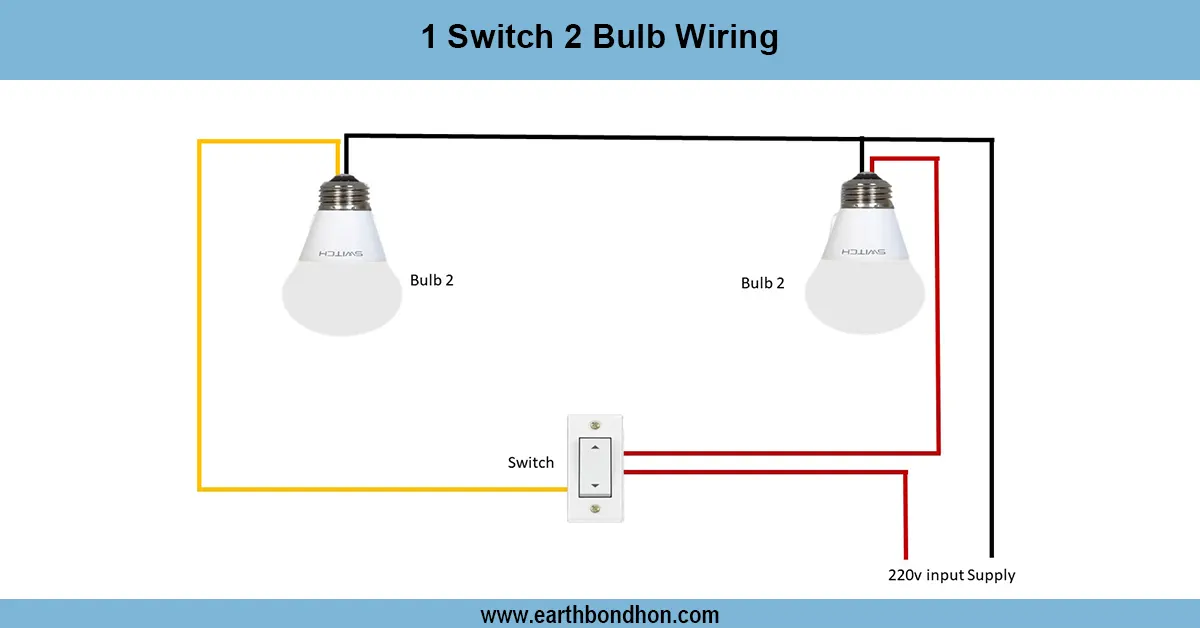
2 Lights 1 Switch Wiring
Learn how to wire 2 lights with 1 switch using a parallel circuit. This guide includes diagrams, FAQs, formulas, and real data to simplify your electrical project.