

3 switch 1 Light connection
Understand how to wire 3 switches to control 1 light using two 2-way and one intermediate switch. Ideal for staircases or long corridors with 3 access points.
3 point lighting switch
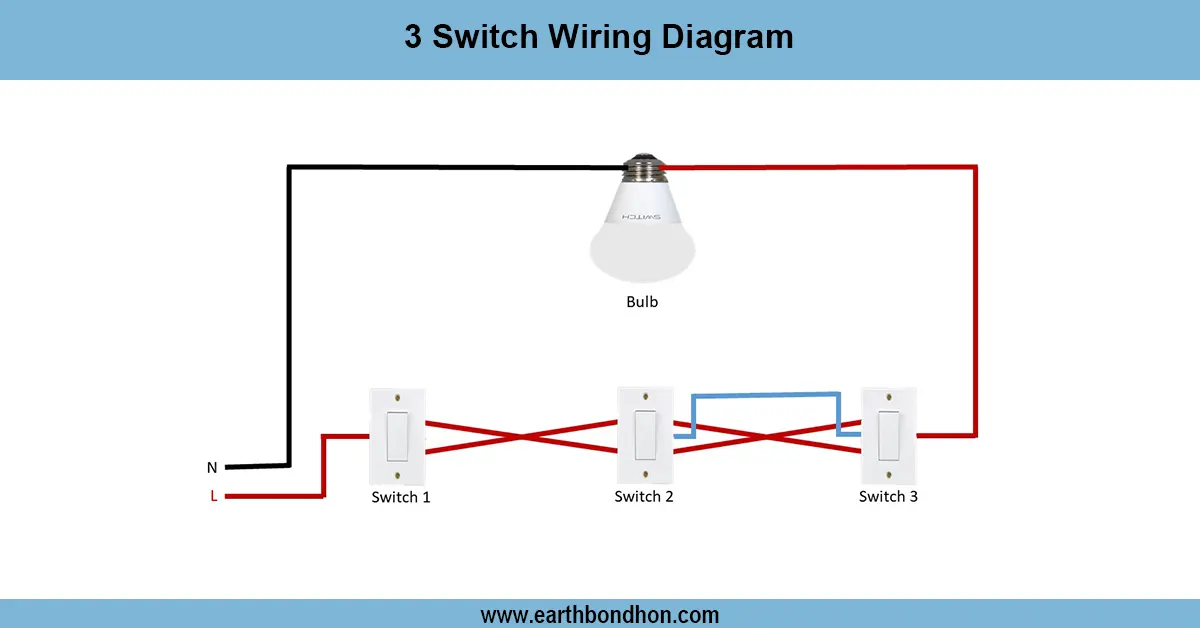
To control 1 light with 3 switches, you will require two 2-way switches and an intermediate switch. This connection will allow you to use one light and make it work in three locations. It is ideal in an extended hallway or a staircase. The trick is to control the traveler wires at the intermediate switch and use the 2-way switches. After the connection is made in the right way, any of the switches will make the light ON or OFF.
Wiring Logic:
- Switch 1 (2-way SPDT) → traveler wire
- Intermediate switch (DPDT) → reroutes travelers
- Switch 2 (2-way SPDT) → light fixture
- Live & neutral → connected to source and load
3 switch 1 light wiring
This wiring system (3-switch 1-light) can give you control over a single light in three locations. This is usually realized with two 2-way (SPDT) and an intermediate switch (DPDT). Between the two 2-way switches, there is an intermediate switch that directs the flow of current according to the toggle. It is best used in long corridors, on stairs, or in big rooms that have several means of access. These switches turn the light on/off without the necessity of having to go back to the first switch. Traveler wires should be wired and connected correctly to result in safe and efficient operation.
3-way switch light control
| Switch Type | Position | Connected To |
|---|---|---|
| 2-Way Switch (SPDT) | Switch A | Power Line → Traveler |
| Intermediate Switch (DPDT) | Switch B | Traveler Wires Cross Connected |
| 2-Way Switch (SPDT) | Switch C | Traveler → Light → Neutral |
Frequently Asked Questions - 3 switch 1 Light connection:
What is a 3 switch 1 light connection?
It’s a wiring setup allowing one light to be controlled from three locations using two 2-way and one intermediate switch.
What switches are needed?
Two 2-way (SPDT) switches and one intermediate (DPDT) switch.
Where is the intermediate switch placed?
Between the two 2-way switches to reroute the traveler wires.
What wire connects the switches?
Traveler wires connect all three switches to each other.
Can I control the light from any switch?
Yes, any of the three switches can turn the light ON or OFF.
Is it safe for home use?
Yes, if properly wired with standard safety precautions and insulation.
Where is this setup useful?
In staircases, corridors, or large rooms with multiple entrances.
Is this the same as a 3-way switch?
Not exactly. 3-way is US term for 2-way (SPDT). Intermediate switch adds third control point.
Can I use normal switches?
No. You need one intermediate switch and two 2-way switches.
Do I need an electrician?
Recommended if you’re not experienced with electrical wiring.
Related Posts
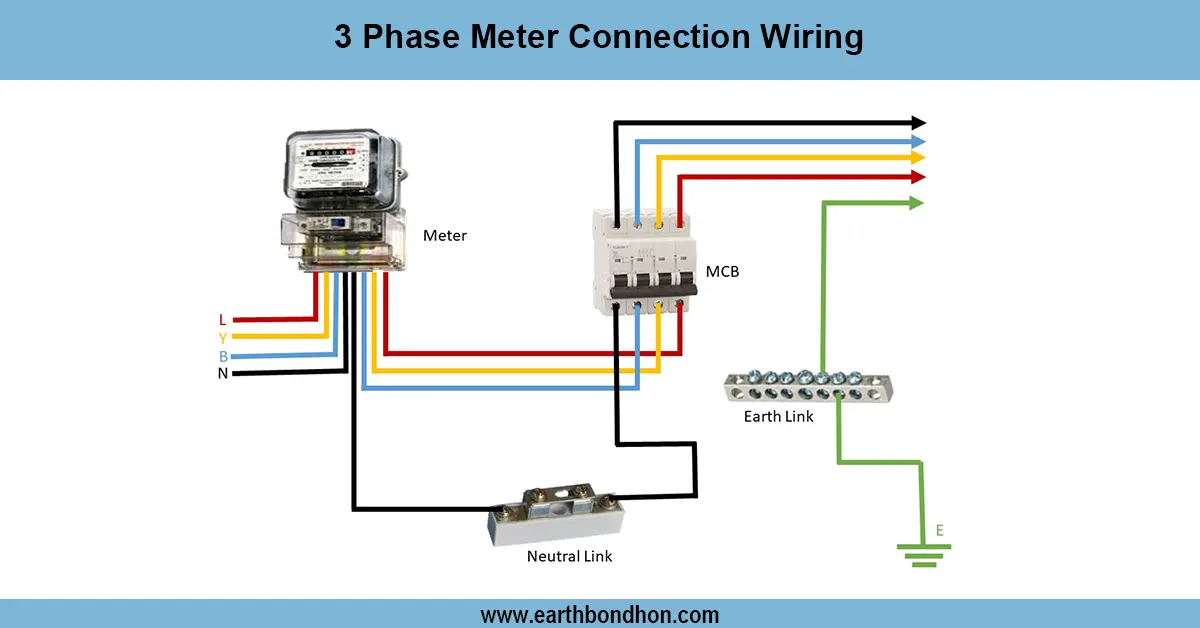
3 Phase Meter Connection Diagram
Learn the correct wiring connection for a 3-phase meter with step-by-step guidance, ensuring safe and accurate power measurement for 3-phase electrical systems.
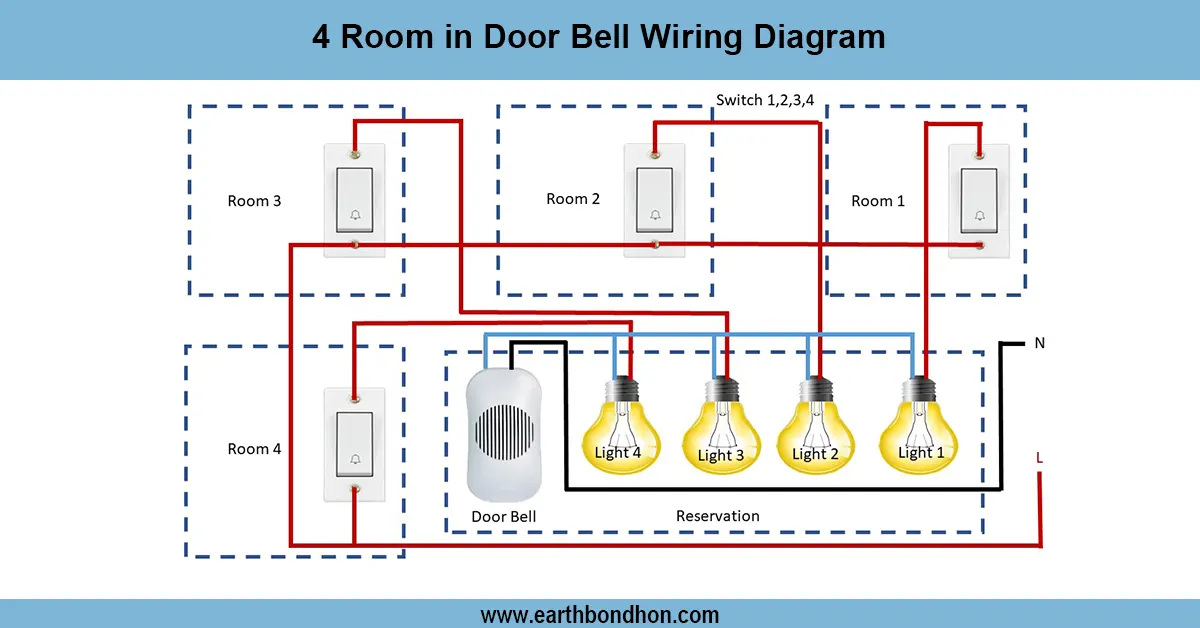
Doorbell Wiring Diagram
Wiring diagram for connecting a doorbell system to 4 rooms. Learn how to use push buttons, bells, and transformers for clear alerts in multiple rooms.
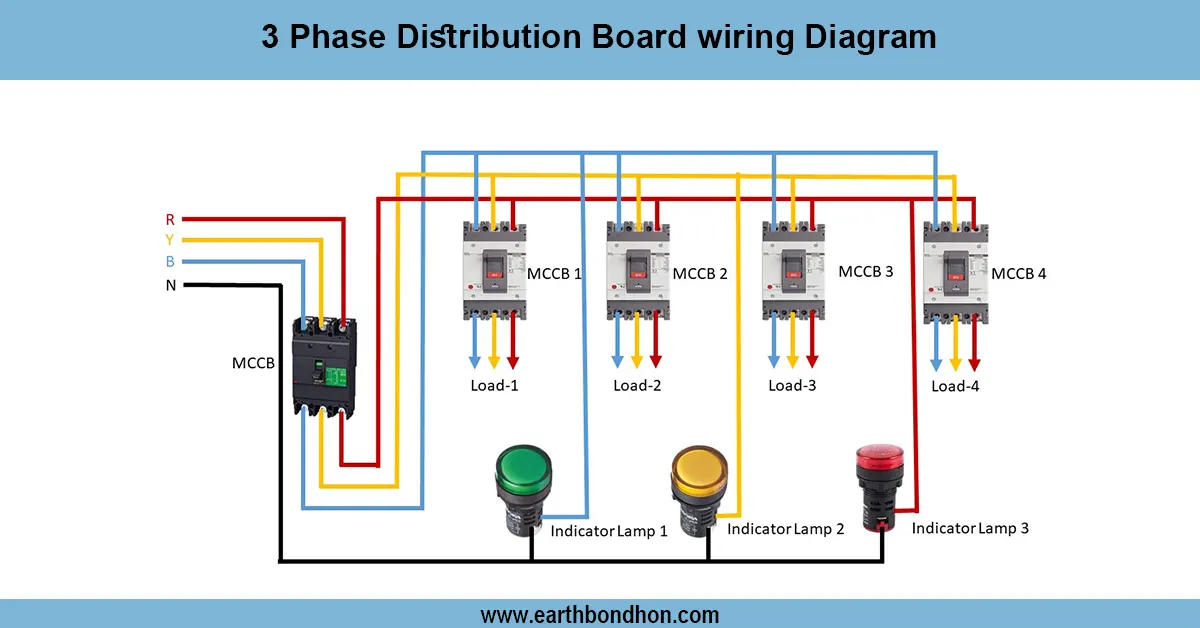
3 Phase Distribution Board wiring
Comprehensive 3-phase distribution board wiring guide for safe and efficient power distribution with MCCB, breakers, neutral, and earth connections.
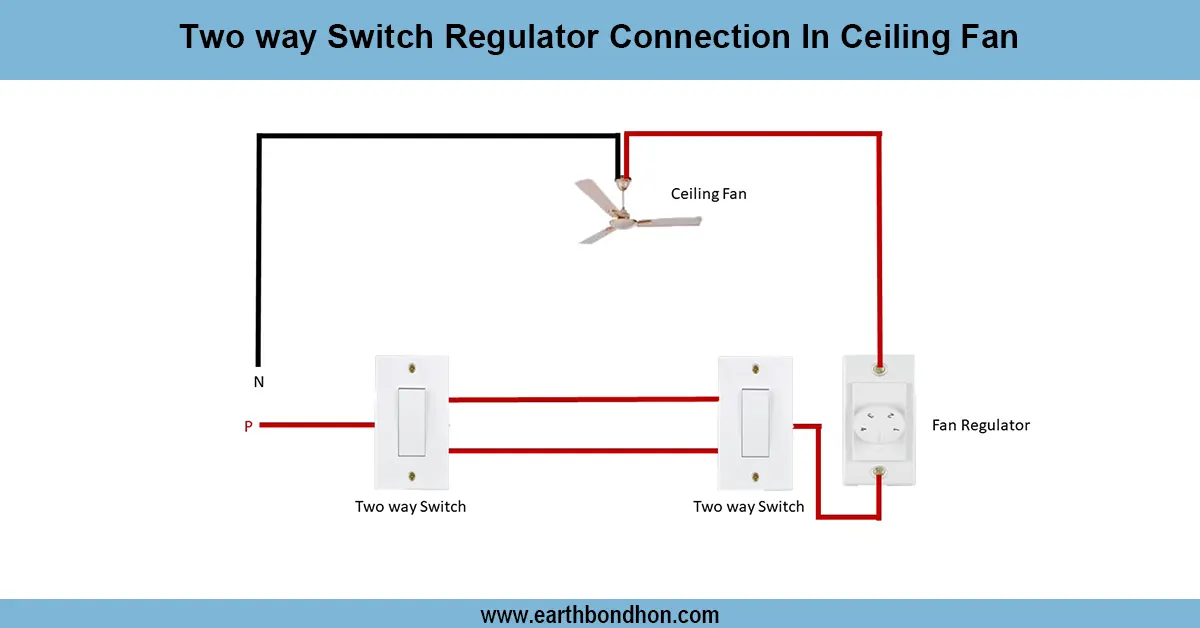
Ceiling Fan Regulator connection
Wiring diagram showing how to connect a two way switch with a regulator to control ceiling fan speed and ON/OFF from two locations.
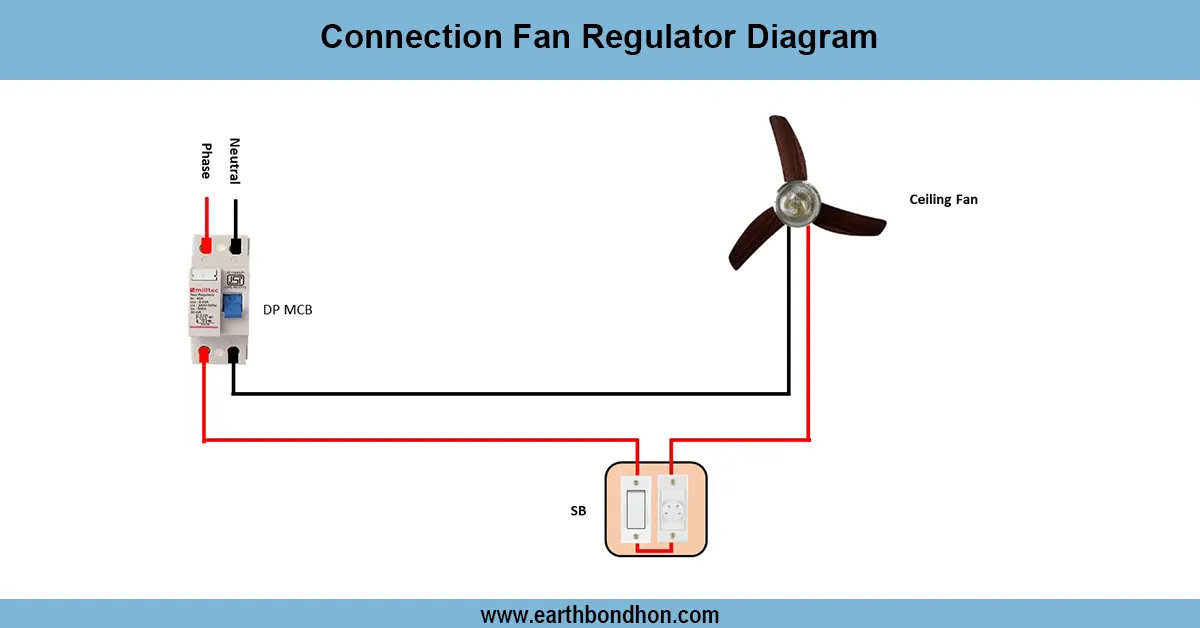
Regulator Connection With Ceiling Fan
Learn how to wire a ceiling fan with a regulator to control fan speed efficiently. Ideal for homes, this guide explains the correct connection for safety and functionality.
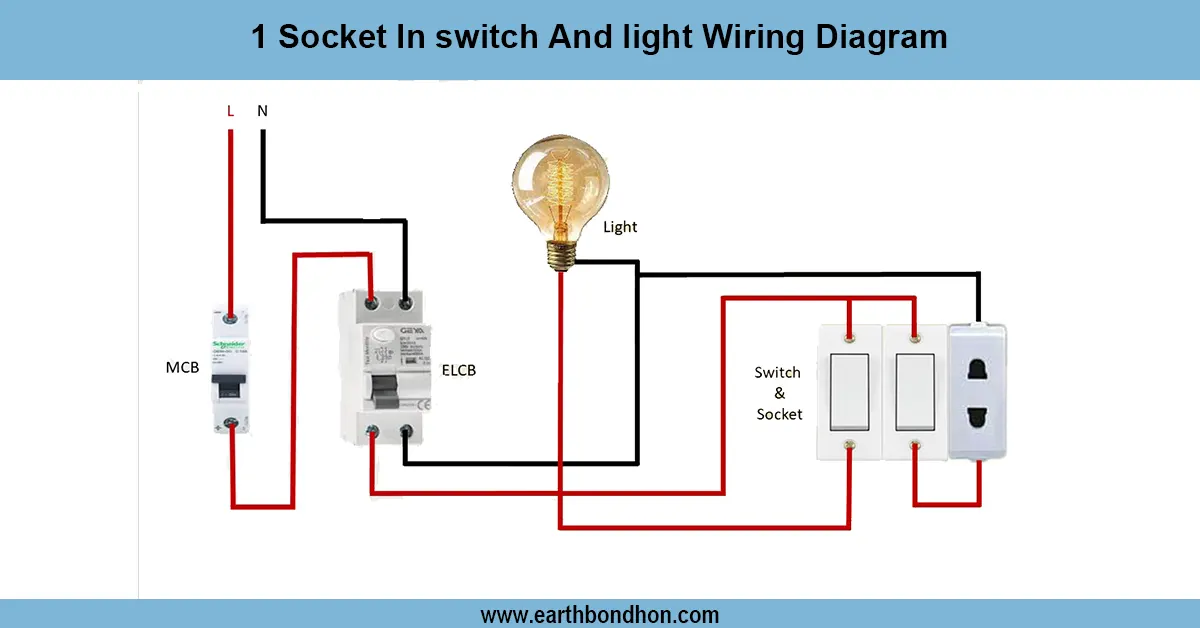
1 Switch 1 Socket connection
Learn how to wire a light and socket using one switch. Simple connection for homes and offices with a clear circuit diagram and safety instructions.